
Microcement and Concrete-Look Walls in Auckland: Cost, Look and Where They Suit
Microcement walls in Auckland have gone from a niche architectural detail to one of the most requested finishes we get asked about — and for good reason. A concrete-look wall gives you the calm, seamless, slightly imperfect surface that flat paint simply cannot fake, without the weight or cost of pouring actual concrete. But there is a lot of loose language around the term, a wide spread of quality between applicators, and a real gap between what the finish costs in a magazine and what it costs on a villa wall in Grey Lynn. Here's an honest guide to what the finish is, where it belongs in a New Zealand home, and what you should expect to pay.
What microcement actually is (and what it isn't)
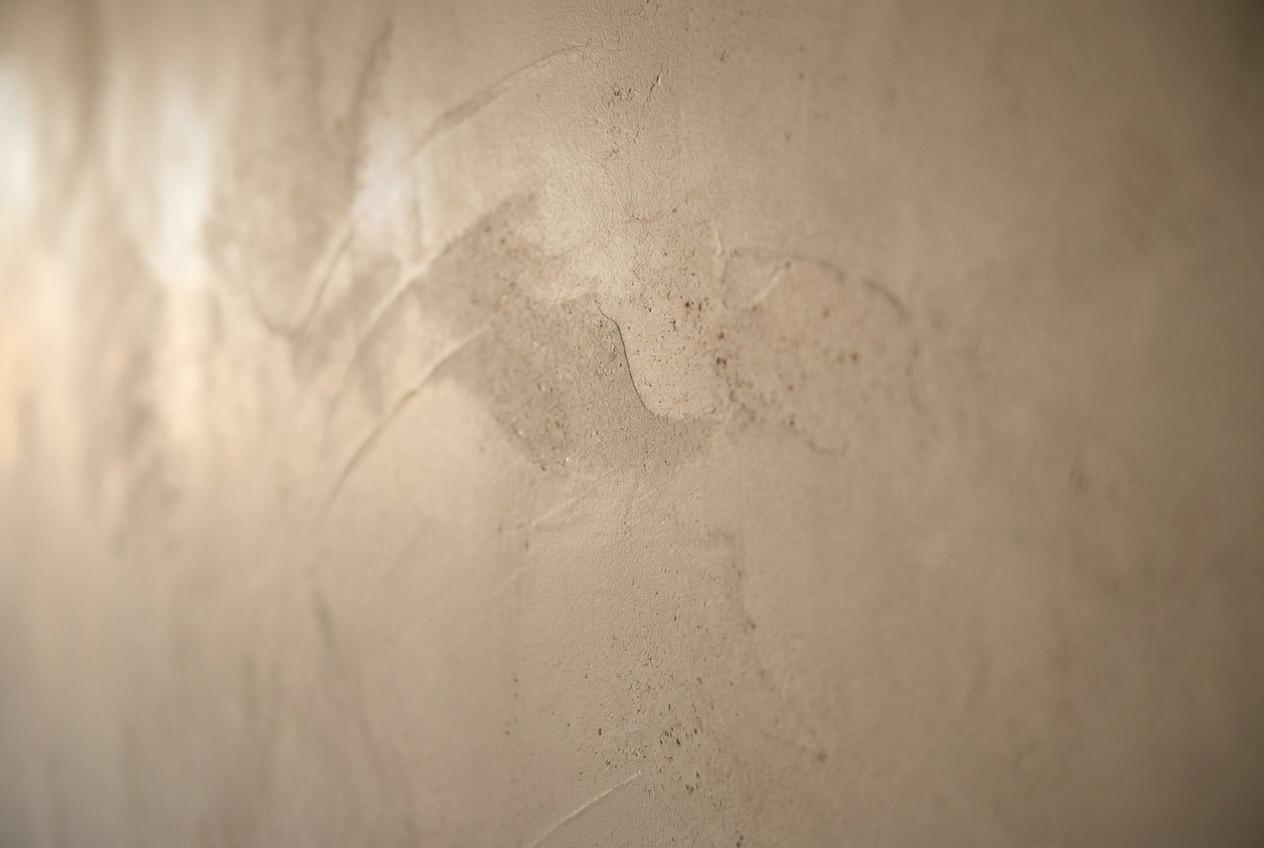
Microcement is a thin, hand-applied cement-based coating — usually only 2–3 mm thick — built up in multiple layers over a prepared substrate and sealed. Because it's applied by hand rather than poured, it carries tonal variation and soft trowel movement rather than a flat, printed uniformity. That movement is the whole point of the finish.
What it isn't: microcement is not polished concrete, and it isn't a paint. Polished concrete is a slab, ground and honed. Paint sits on the surface as a film. Microcement is a system — primer, mesh or reinforcement where needed, base coats, finish coats, and a sealer — and every layer has to be right or the finish fails.
It's also worth being straight about product. The Porter's Paints artisan range we work in doesn't include a true microcement system. What we deliver for clients chasing the concrete look is one of three things:
Fresco polished plaster tinted to concrete tones — the closest match for a seamless, subtly mottled, stone-like wall with real depth.
Smooth Impasto — a natural, trowel-applied finish with a softer, chalkier concrete character.
Stone Paint (fine or coarse) — a textured, granular concrete-render look at a considerably lower price point.
For floors, wet-room tanking and shower linings, a dedicated microcement system installed by a specialist flooring trade is the right call. For walls, a hand-troweled plaster finish gets you the same look with better repairability. We'll always tell you which one your project actually needs.
Why Auckland homeowners are choosing concrete-look walls in 2026
Three things are driving it. First, the broader move toward tactile, matte, low-contrast interiors — after a decade of gloss and hard edges, people want surfaces that feel like something. Second, renovation practicality: a hand-applied wall finish can go over existing plasterboard or a sound painted wall without demolition, which matters when you're working around a family and a budget. Third, light. Auckland gets flat, grey, humid light for a good part of the year, and a wall with genuine tonal movement stays interesting under it, where a flat painted wall goes dead.
The look also sits comfortably with the materials New Zealand architects are specifying right now — white oak, aged brass, dark-stained cedar, honed stone. Concrete-look walls read as a backdrop rather than a statement, which is why they work in whole rooms and not just as a single feature wall.
Where concrete-look finishes suit an Auckland home
Living and dining walls — especially around a fireplace, where the mass of the finish makes visual sense.
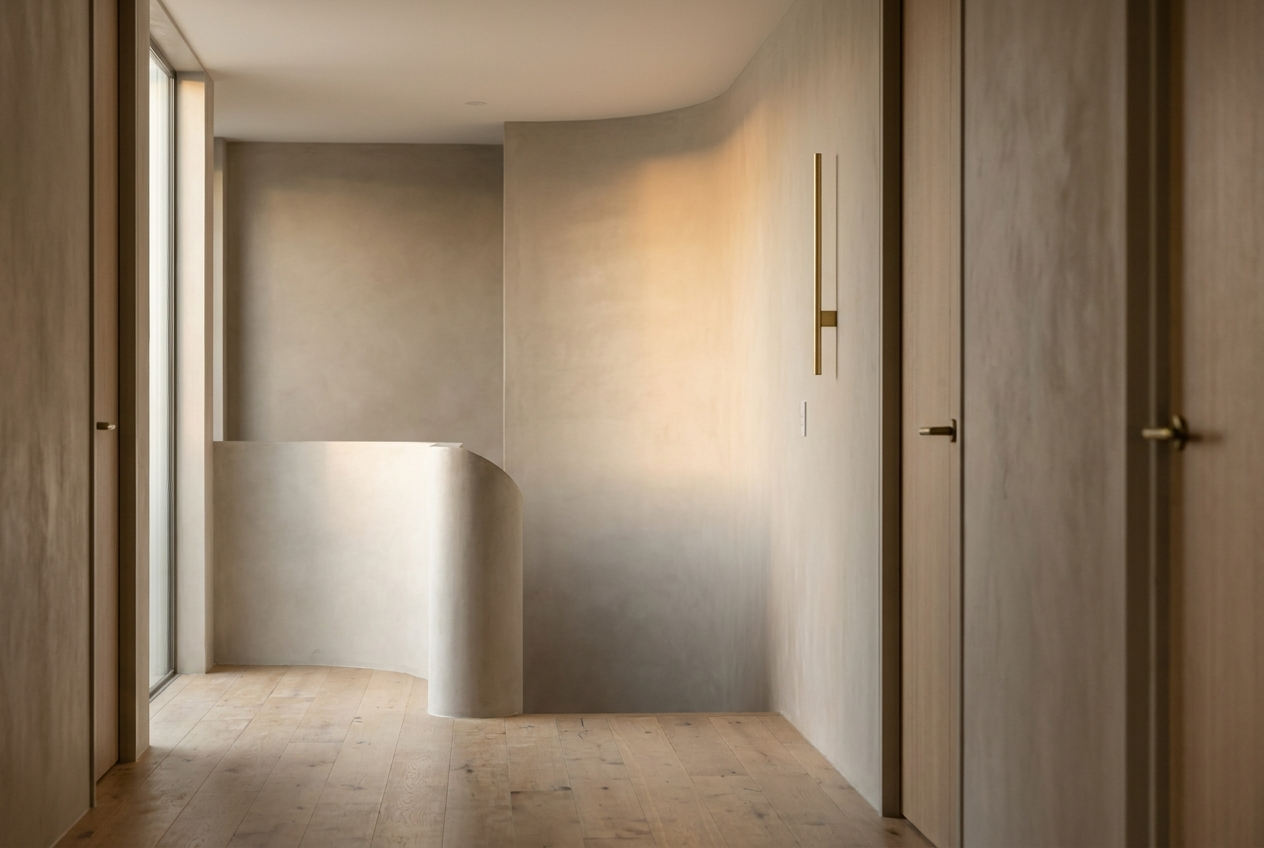
Hallways and stairwells — long, uninterrupted runs are where a seamless finish really pays off, and it's far tougher than flat paint in a high-traffic zone.
Bedroom feature walls and bedheads — a warm grey or bone concrete tone is quieter than a colour and ages better.
Kitchen splashbacks and island fronts — sealed properly, and away from direct water contact.
Bathrooms — possible, but the detail matters enormously. We've written a separate guide on wet areas because the wrong finish in a shower is an expensive mistake.
Where it's a poor fit: exterior walls exposed to Auckland's coastal weather (mineral and silicate systems are the right answer there), any wall with active moisture or movement, and any substrate that hasn't been made genuinely flat first. A hand-applied finish shows every hollow and every hump in the wall behind it.
Microcement vs polished plaster vs Stone Paint
Concrete-look Fresco plaster — seamless, soft mottling, low sheen. Best for feature walls, whole rooms and hallways. Highest cost.
Smooth Impasto — chalky, matte, natural movement. Best for bedrooms and quieter spaces. Mid cost.
Stone Paint — granular, render-like texture. Best for large areas and exterior-adjacent looks. Lowest cost.
If you're weighing concrete against a classic Italian look, our Venetian plaster cost guide covers the polished, higher-sheen end of the same family. Both are built with the same skills — the difference is how far you burnish the final coat.
What microcement and concrete-look walls cost in Auckland
The honest answer is that the product is a small fraction of the price. You're paying for a skilled applicator's hands, over multiple days, on a wall that has to be prepared to a very high standard first.
Indicative 2026 ranges, including GST, for a properly prepared interior wall:
Concrete-look polished plaster (Fresco system): approximately $215–$280 per m². A 10 m² lounge feature wall lands around $2,200–$2,800. An 18 m² wall runs about $3,900–$5,000. A 35 m² room of walls sits around $7,600–$9,800.
Smooth Impasto and textured concrete-look systems: from around $120–$180 per m² at reasonable scale.
Minimum decorative job: around $1,500 incl GST. Small walls carry a floor price, because the setup, prep, masking and multi-day return visits cost the same whether the wall is 4 m² or 9 m².
Those figures assume standard preparation — sanding, filling and spot-priming a sound wall. If the substrate needs skimming to a Level 5 flatness first (common in older Auckland homes and almost always needed for a seamless finish), add plastering on top. If you want a broader picture across the whole finishes range, our decorative wall finishes cost guide sets each finish side by side.
Every one of these is an indicative range and moves with access, ceiling height, substrate condition and the number of coats your chosen colour needs. For a real number, the fastest route is our free instant estimate.
Durability and maintenance in Auckland's climate
Sealed correctly, a concrete-look plaster wall will outlast paint comfortably — we'd expect 15 years or more in a living space with no more than an occasional wipe. It doesn't scuff the way flat acrylic does, and it doesn't show the roller-lap sheen differences that plague repainted walls in raking light.
Two Auckland-specific realities are worth knowing. Humidity means the sealer choice matters: a matte penetrating sealer keeps the look right, but in a kitchen or a bathroom you want something with genuine water resistance. And salt air near the coast is hard on everything — internally it's not an issue, but don't be talked into a concrete-look plaster on an exposed exterior wall.
Repairs are the finish's quiet advantage over microcement flooring systems. A knock or a chip in a hand-applied plaster can be patched and blended by the same applicator. Whole-wall replacement is rarely necessary.
Why the applicator matters more than the product
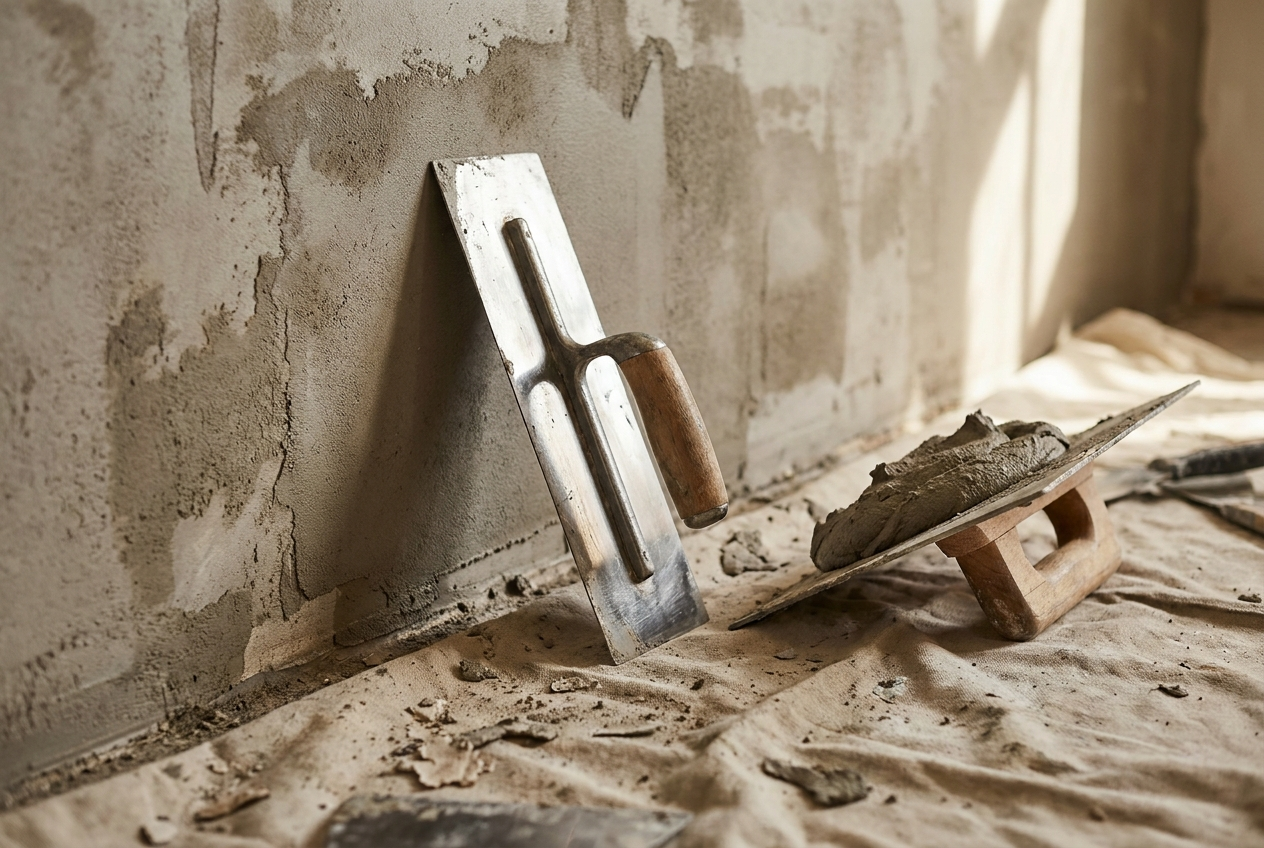
Anyone can buy the material. The finish lives or dies on trowel technique, timing between coats, and how the applicator reads the wall. Two people using identical product on identical walls will produce visibly different results — one with the soft, cloud-like depth you saw on the mood board, one with hard trowel lines and a blotchy dry-back.
Key Painting works in the Porter's Paints system as an accredited Auckland applicator, and we're Master Painters members and Resene Eco Decorator accredited. When you're pricing a concrete-look wall, ask to see raking-light photos of finished work rather than flat, evenly lit shots — flat light hides everything that matters. You can see the full range on our decorative finishes page.
Frequently asked questions
How much does microcement cost per square metre in NZ?
For a hand-applied concrete-look wall finish, expect roughly $215–$280 per m² including GST for a polished plaster system, and from around $120 per m² for a lighter textured finish. Small walls carry a minimum job charge of about $1,500 incl GST. Dedicated microcement flooring systems are priced separately by specialist installers.
Can you apply a concrete-look finish over painted walls?
Yes, provided the existing paint is sound, well-adhered and the wall is flat. We sand, fill and prime, and where the wall needs it we skim to a Level 5 finish first. Peeling or chalky paint has to come off — a hand-applied plaster is only as stable as what's underneath it.
Is microcement suitable for an Auckland bathroom?
Walls, yes, with the correct sealer and detailing. Shower enclosures and floors need a tanked, purpose-built microcement system rather than a decorative wall plaster. We'll tell you honestly which zones we'd finish and which we'd tile.
How long does a concrete-look wall take to apply?
A single feature wall is typically a two to three day job, spread across coats and drying time, plus preparation beforehand. A full room of walls usually runs four to six days. Rushing the drying between coats is the single most common cause of a poor finish.
Does a concrete-look wall add value when selling?
It won't be line-itemised by a valuer, but in Auckland's premium market a well-executed feature wall photographs beautifully and helps a home feel considered and finished. It's one of the higher-impact-per-dollar changes you can make to a living space.
Ready to see how it would look on your wall?
If you're weighing up a microcement or concrete-look wall in your Auckland home, we'd rather talk you into the right finish than the most expensive one. Get a free instant estimate for a ballpark in about 60 seconds, or book a consultation and we'll bring samples to your place so you can see the movement and tone in your own light before you commit.