
Home / FAQs
The Auckland painting & decorative finishes bible.
Everything we know about painting Auckland homes, written down straight: real costs per room and per m², every Porter's finish explained, prep standards, timeframes and process. If it's not answered here, call us and it will be tomorrow.
Working with Key Painting
Process, coverage & credentials
How a job actually runs from first call to final walkthrough - and why the applicator matters more than the tin.
What's the typical process when working with Key Painting?
- 1. Free consult - on site, anywhere in Auckland. We look at your walls, substrate and light.
- 2. Samples on your wall - for decorative finishes we brush up real Porter's samples in your light, never from a brochure.
- 3. Fixed written quote - scope, prep level, coats, products, timeline and price. No surprises later.
- 4. Preparation - masking, repairs and plastering to Level 4-5 where the finish demands it, by our own team.
- 5. Application & handover - hand-applied coats, checked in raking light, site left spotless, care guidance included.
Which Auckland suburbs do you cover?
All of Auckland. Most of our work is in the central suburbs - Ponsonby, Grey Lynn, Herne Bay, Westmere, Pt Chevalier, Mt Albert, Mt Eden, Kingsland, Sandringham, Epsom, Remuera, Parnell, Newmarket, Orakei, Mission Bay and St Heliers - plus the North Shore (Devonport, Takapuna, Milford) and East, West and South Auckland by arrangement. Consults are free anywhere in the region, Saturdays 10-3, Sundays by appointment.
How far ahead should I book my painting job?
2-4 weeks is typical for interiors and feature walls; single decorative walls can often slot in sooner. Exteriors book out fastest over the October-April painting season, so lock those in 4-6 weeks ahead. Pre-sale repaints get priority scheduling - tell us your listing date and we work backwards from it.
Are you accredited and insured?
Yes - and these are checkable, not claims: Master Painters New Zealand member, Resene Eco Decorator (Resene's highest painter accreditation), Site Safe member, Resene Wash Wise approved, and $10m public liability insurance. Decorative work is applied by Porter's Paints-trained applicators. More on our About page.
Do you guarantee your work?
Yes - our workmanship is guaranteed, on top of the manufacturer warranties that come with full Resene and Porter's systems applied to spec. Master Painters membership adds independent accountability: strict standards for workmanship, systems and conduct, with a complaints process behind it. If something's not right, we come back and make it right.
Do you work with interior designers and architects?
Constantly - it's a core part of our decorative work. Designers specify a finish (lime wash, Fresco, a metallic) and need an Auckland applicator who can actually deliver it. We sample for client presentations, price from plans, work through you or directly with your client, and hold the finish schedule to spec. $10m insured, Site Safe, and used to working alongside other trades on renovation programmes.
Do I need to move out while you paint? Can you work around my family?
Almost never - most interior repaints happen while families live in the home. We work room by room, move and cover furniture, manage dust, use low-VOC paints as standard, and tidy daily so the house stays liveable. Exteriors and roofs barely affect you at all.
Does painting or a decorative finish need council consent in Auckland?
No - painting and decorating is exempt building work, so interior repaints, feature walls and decorative finishes never need consent. The one caveat: homes in Special Character Areas (parts of Ponsonby, Grey Lynn, Devonport and similar heritage suburbs) can have exterior colour and material guidance under the Auckland Unitary Plan. We'll flag it and advise if your street is affected.
Pricing & quotes
What painting actually costs in Auckland
Real 2026 ranges from the rates we quote with - not bait numbers. Every figure below is confirmed free, on site, before anything starts.
How much does interior house painting cost in Auckland?
Interior repaints run $55-$85 per m² of floor area for a standard-condition home - walls, ceilings and trims, two coats, prep included. That puts a typical 140m² 3-bedroom villa at $7,700-$11,900. New builds with fresh plaster are cheaper at $40-$60/m² because the prep is lighter. Get your number in 60 seconds with the free estimator.
What does it cost to paint a single room?
Room-by-room, including prep and two coats:
- Bedroom or office: $600-$1,300
- Living, dining or lounge: $1,000-$2,500
- Hallway or stairwell: $700-$1,800
- Bathroom or laundry: $500-$1,100
- Kitchen (walls & ceiling): $700-$1,600
Condition moves these - peeling, cracks or mould add prep time (see below).
How much does exterior house painting cost in Auckland?
Exteriors run $55-$100 per m² of floor area depending on cladding and condition - from around $8,000 for a standard single-level home to $20,000+ for a large two-storey weatherboard villa. Two-storey homes usually need scaffolding at $1,500-$4,000. Full breakdown on the exterior painting page.
How much does a feature wall cost?
A standard painted feature wall runs $250-$600 per wall. Decorative finishes - lime wash, French wash, Fresco polished plaster, liquid metals - are hand-applied, multi-coat systems priced per m² by finish, with a single wall as the usual entry point. The washes sit at the accessible end; polished plaster and real metals are premium. The estimator prices all eight finishes.
What makes a painting job cost more than the base rate?
Three things, and we itemise all of them in writing: surface condition - "a bit tired" adds up to 15%, while peeling, flaking, cracks or mould add 20-40% in prep labour; access - two-storey exteriors need scaffolding at $1,500-$4,000; and lead-safe prep on pre-1980 homes, which can add $1,000-$2,000 on exteriors (see the exterior section below).
How does the 60-second instant estimator work - and is it accurate?
You answer a few questions - job type, size or rooms, condition, finish - and it returns a range built on the exact rates on this page, the same ones we quote with. It's honest about being a range: nobody can give you a fixed price without seeing the walls. The free on-site consult turns it into a fixed written quote. Try it here.
Do you charge for quotes, consults or samples?
No. On-site consults, written quotes and finish samples brushed up on your actual wall are all free, Auckland-wide, no obligation. We'd rather you choose with real information.
Is there a minimum job size?
Our minimum engagement is $1,500 - below that, the setup and travel outweigh the work. Small jobs are often best bundled: a feature wall plus touch-ups, or two rooms together.
Is a decorative finish more expensive than wallpaper?
Comparable - quality wallpaper plus professional hanging often costs as much per m² as many Porter's finishes. The difference is longevity: a hand-applied finish has no seams to lift, no edges to peel, and repairs blend in rather than needing a full re-hang. It's also genuinely one of a kind, which wallpaper never is.
Decorative finishes
Lime wash - the complete guide
The most requested finish in Auckland right now. Everything to know before you commit a wall to it.
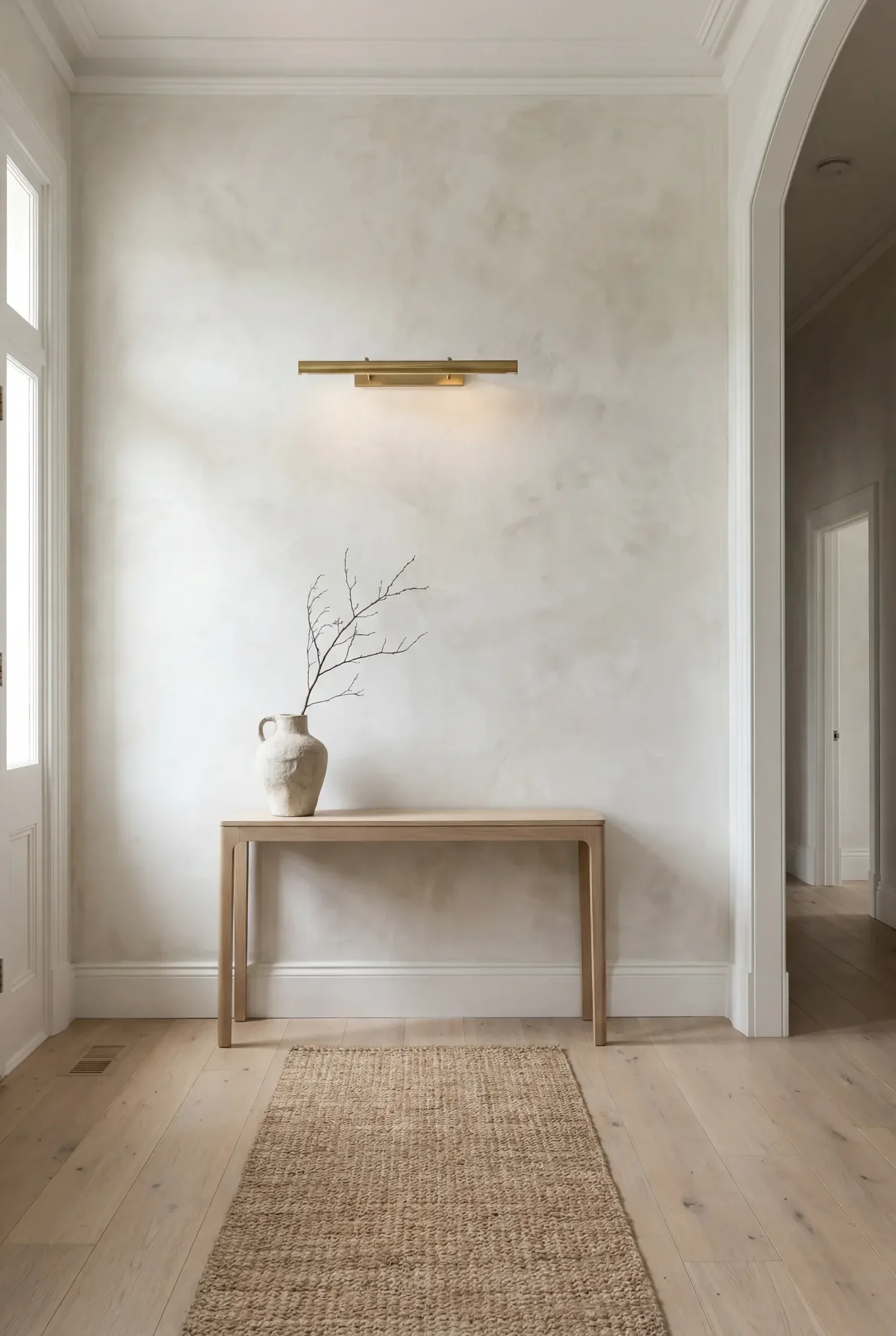
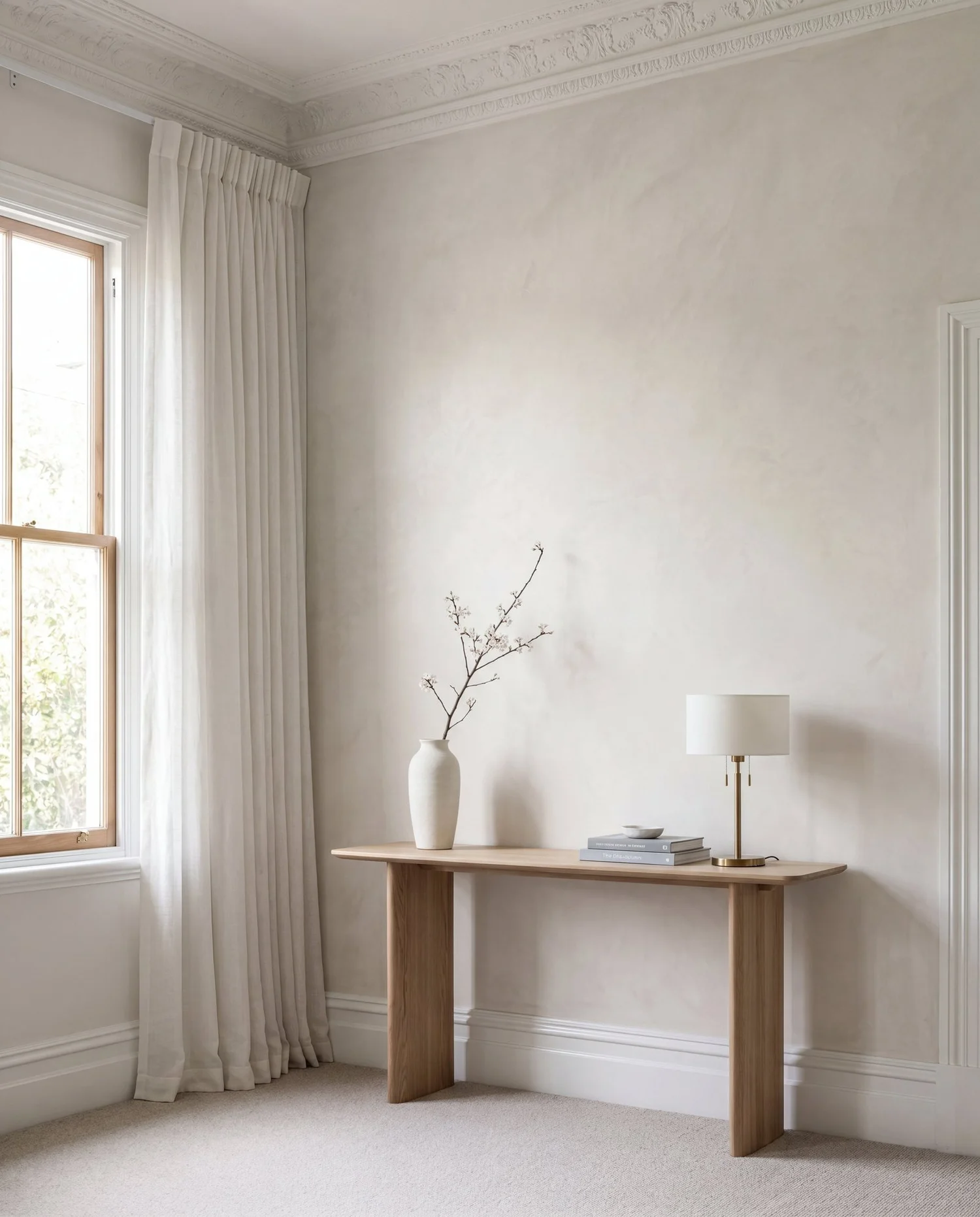
What exactly is lime wash paint?
Lime wash is made from slaked lime putty and mineral pigments - one of the oldest wall finishes in the world. Instead of sitting on the surface like acrylic paint, it soaks into the wall and calcifies, becoming part of the substrate. The result is a velvety, chalky, ultra-matte surface with soft cloudy movement where the brush worked the coats. We apply the Porter's Paints lime wash system, tinted with natural oxides.
Where does lime wash work best in New Zealand homes?
Heritage villas and bungalows are its natural home - it's what many of those walls originally wore - but it's now equally at home in modern interiors. Best rooms: living rooms, bedrooms, hallways, fireplace surrounds and plastered brick. Because it's breathable, it suits older solid-wall construction that needs to release moisture rather than trap it. See the full lime wash page for photos.
What's the difference between real lime wash and "limewash-effect" paints?
Real lime wash is mineral - lime and pigment reacting with air to calcify into the wall, giving genuine depth, a breathable surface and a patina that improves with age. "Limewash-effect" acrylics are ordinary paint mimicking the look; flatter, plastic-feeling, and they age like paint, not like lime. If you're paying for the look, get the real system - the cost difference is smaller than you'd think.
Can lime wash be applied over existing painted walls or Gib?
Yes - this is most of our lime wash work. Standard plasterboard or previously painted walls first get a mineral base coat that gives the lime something to key into, then two to three wash coats build the cloudy movement. The wall usually needs a Level 4-5 surface first because the raking light on a chalky matte finish shows every flaw - our own plastering team handles that.
Can I use lime wash in a bathroom or kitchen?
Yes, with the right spec: in wet areas we seal lime wash in splash and steam zones with a breathable matte sealer that protects without killing the chalky look. Powder rooms are one of the best lime wash spaces in the house. Direct shower-wall contact is the one place we'd steer you to a different system - honestly, at the consult.
How does lime wash age, and how do I clean it?
It patinas rather than wears out - the surface softens and gains character over years, which is the point. Care is simple: dust it, don't scrub it (unsealed), or wipe gently if sealed. Marks and dings spot-repair beautifully because new wash blends into old - something acrylic paint can't do.
How much does lime wash cost in Auckland?
It's priced per m² and sits at the accessible end of the decorative range - a single feature wall is the usual entry point and costs less than most people expect. Multi-coat plus base coat means it's more than flat acrylic, well under polished plaster. The estimator gives you a lime wash figure in about a minute.
Decorative finishes
French wash - the complete guide
Warm, cloudy, watercolour walls - the softer feature option Auckland designers keep specifying.
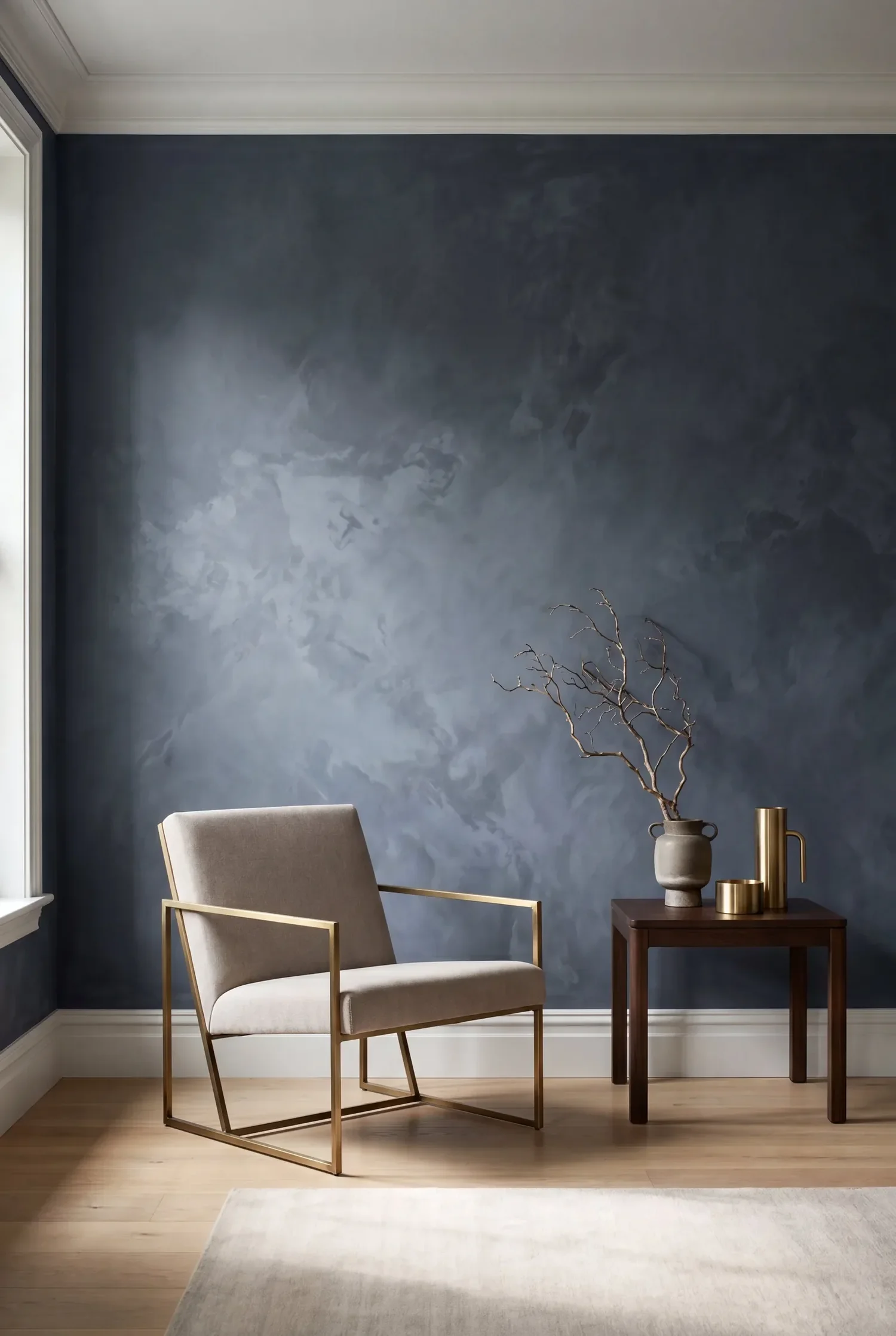
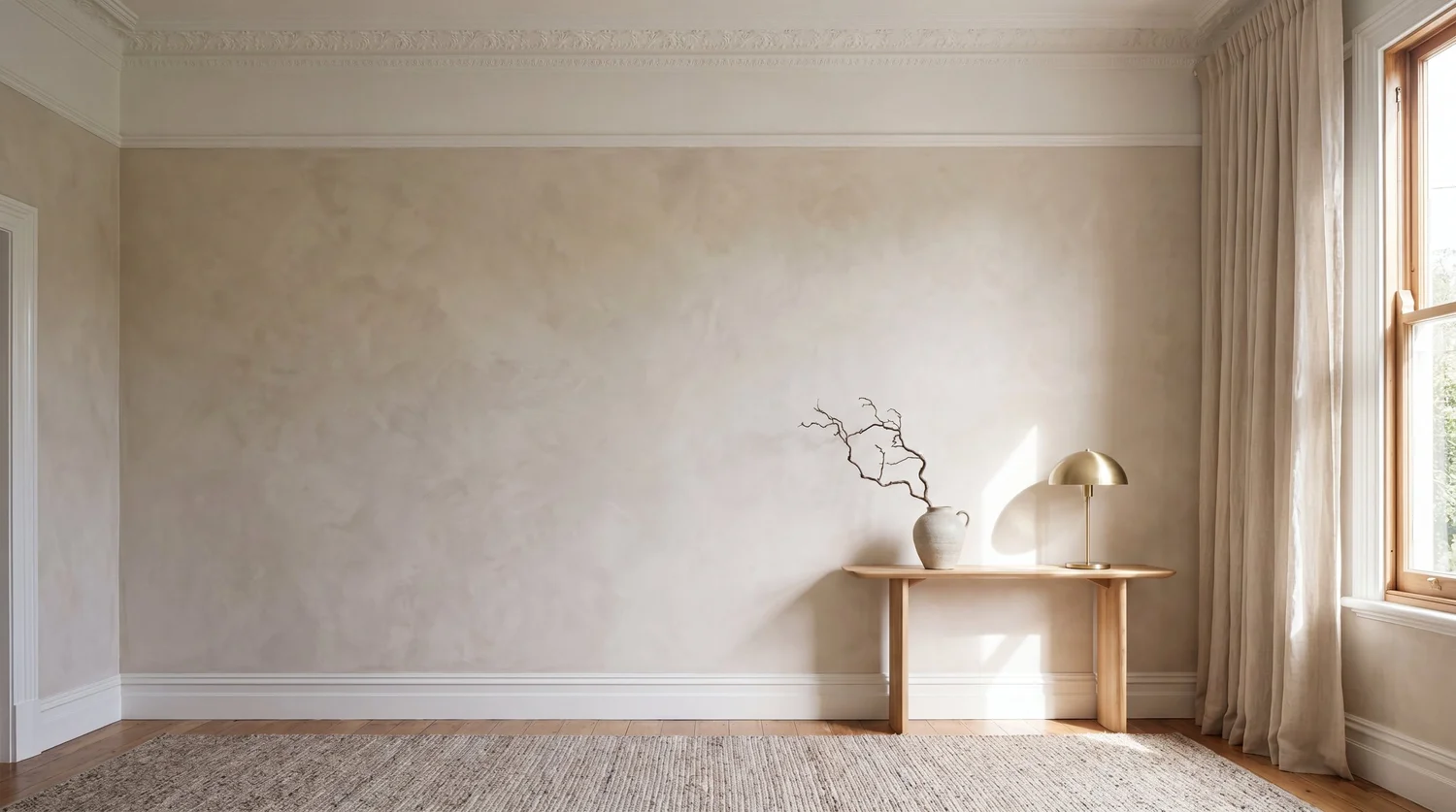
What is a French wash finish?
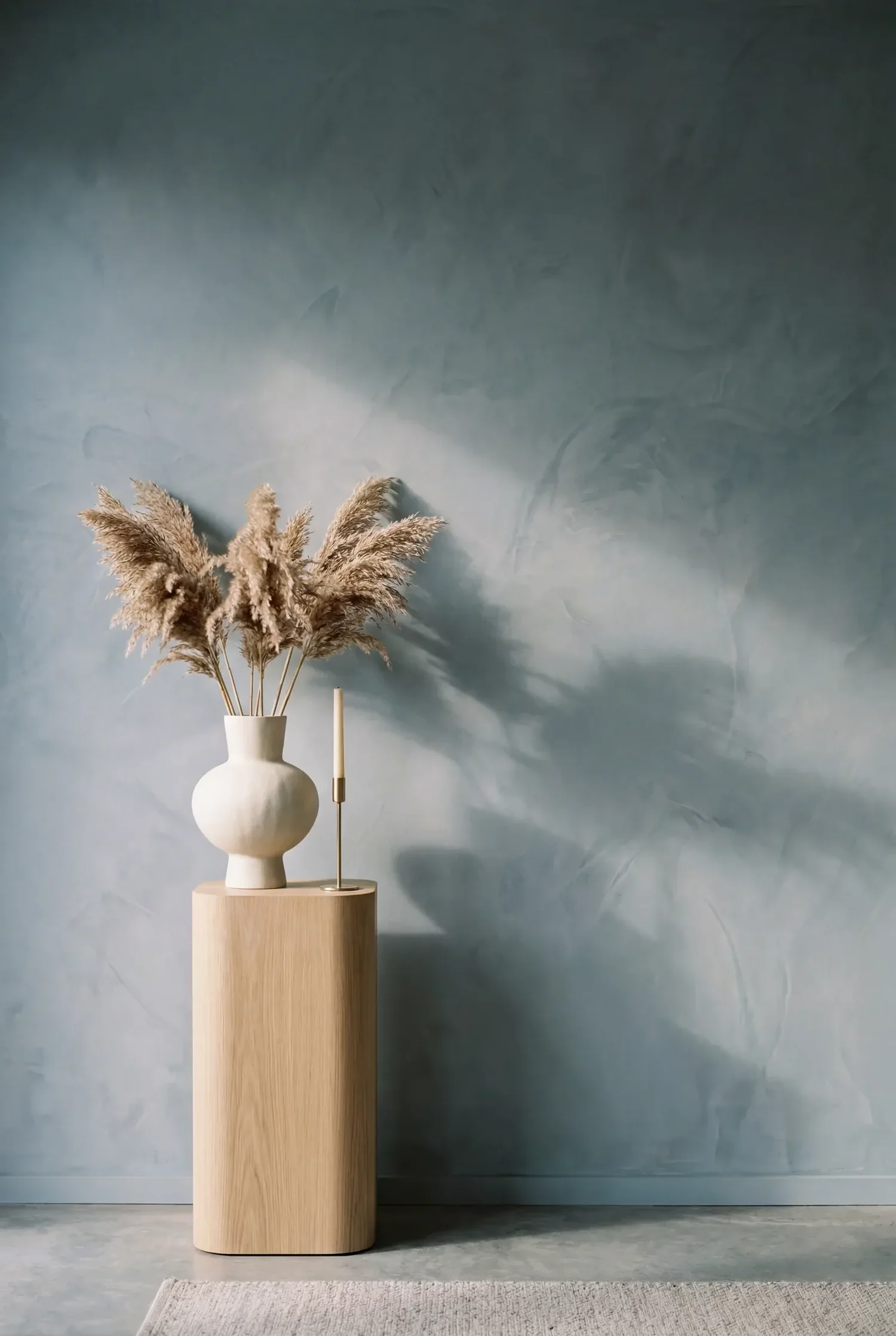
French wash is a tinted glaze hand-worked over a painted base coat - the Porter's French Wash system uses translucent oxide glazes moved with brushes and cloths so the colour pools and lifts across the surface. The effect is layered, cloudy, watercolour-like warmth that shifts as the light moves through the day. Smoother than lime wash, softer than plaster.
What's the difference between French wash and lime wash?
Chemistry and character. Lime wash is mineral - chalky, ultra-matte, slightly textured, absorbed into the wall. French wash is a glaze over paint - smoother to the touch, warmer and more translucent, with more visible hand movement in the finish. Villas lean lime wash; warm living and dining rooms lean French wash. We sample both on your wall if you're torn.
Which rooms suit French wash best?
Dining rooms, living rooms, entrance halls and bedrooms - anywhere you want warmth and depth without heavy texture. It's especially good in rooms that get evening use: the glaze layers come alive under lamplight and candlelight in a way flat paint simply doesn't.
What colours can a French wash be done in?
Almost any palette - the glaze is tinted to order, from barely-there neutrals over white to deep clay, terracotta, ochre and moody blues. Tone-on-tone (glaze a shade or two deeper than the base) gives subtle movement; higher contrast gives drama. We bring brushed-up samples in your shortlisted colours to the consult.
How long does a French wash wall take, and what does it cost?
A feature wall typically takes 2-3 days - base coat, cure, then glaze coats worked by hand. Pricing is per m² in the same accessible band as lime wash; a single wall is the usual starting point. Price yours with the instant estimator.
Decorative finishes
Fresco polished plaster - the complete guide
The Venetian plaster look: burnished, stone-like depth. The statement finish for entrances, fireplaces and high-end fit-outs.
What is Fresco polished plaster?
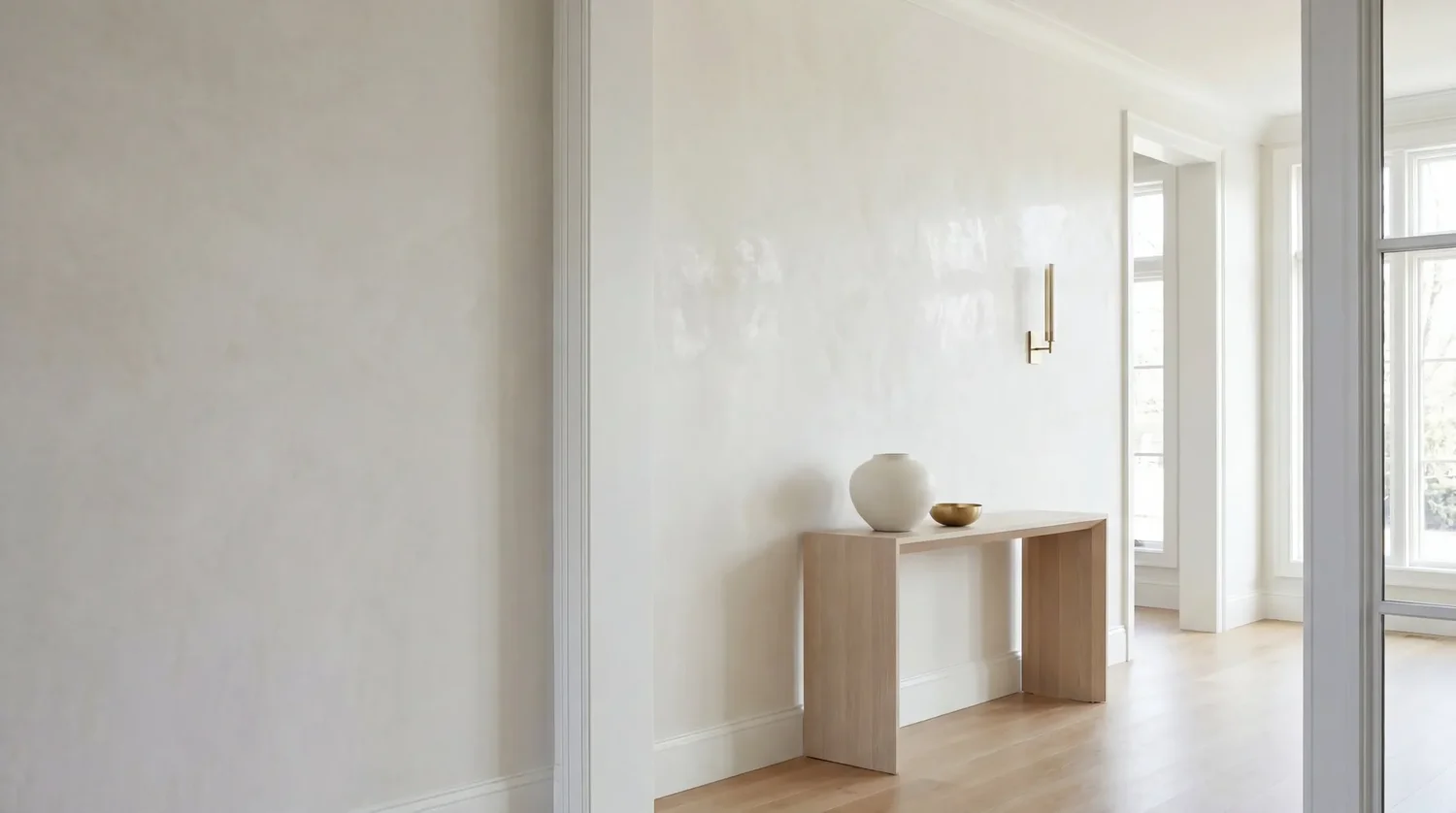
Fresco is Porter's lime-based polished plaster - applied by trowel in multiple thin coats, then compressed and burnished to a smooth, stone-like surface with genuine depth, subtle movement and a soft sheen. It's the finish people mean when they say "Venetian plaster": walls that look and feel like polished limestone, built up by hand.
Is Fresco the same as Venetian plaster or microcement?
Same family as Venetian plaster - lime-based, trowelled, burnished - delivered as a modern, consistent Porter's system. Microcement is different: cement-based, more industrial and typically used on floors and wet areas; Fresco is softer, warmer and made for walls. If you're comparing quotes, make sure they're for a genuine multi-coat burnished plaster, not a textured paint pretending.
Where does polished plaster work best?
Entrance halls, fireplace surrounds and chimney breasts, powder rooms, stairwells, bedheads and commercial spaces - reception walls, restaurants, retail. It's the wall people touch on their way past and ask who did it. As a rule it wants to be a deliberate statement surface rather than every wall in the house.
How durable is polished plaster, and can it be repaired?
Very durable - burnished lime plaster is a hard, dense surface that's been surviving on European walls for centuries, and it can be sealed for busier spaces and wet areas. Chips and damage are repairable by a trained applicator, re-trowelled and burnished back in. That's a genuine advantage over tiles or stone veneer, where damage usually means replacement.
What sheen levels can Fresco be finished to?
From a soft honed matte through to a deeper burnished glow - the sheen comes from compression under the trowel, not from varnish, so it has depth rather than shine. Colour range is wide: chalky whites, greiges, warm neutrals through to deep, moody tones. We sample your shortlist on boards at the consult.
How long does a polished plaster wall take?
Typically 3-5 days for a feature wall: substrate prep to Level 5, then multiple plaster coats with cure time between, then burnishing and sealing. It can't be rushed - the layering is where the depth comes from. Larger commercial surfaces are programmed in stages.
What does Fresco polished plaster cost in Auckland?
It's the premium end of the decorative range - priced per m², reflecting a multi-day, multi-coat, hand-burnished process by a trained applicator. A single entrance or fireplace wall is the classic entry point, and it changes how the whole space reads. Get an indicative figure from the estimator or a fixed price at a free consult with samples.
Decorative finishes
Liquid copper, gold & iron rust - real metal walls
Genuine metal suspended in the coating, patinated by hand. Not metallic-look paint - the real thing.
Is liquid copper really metal, or just metallic paint?
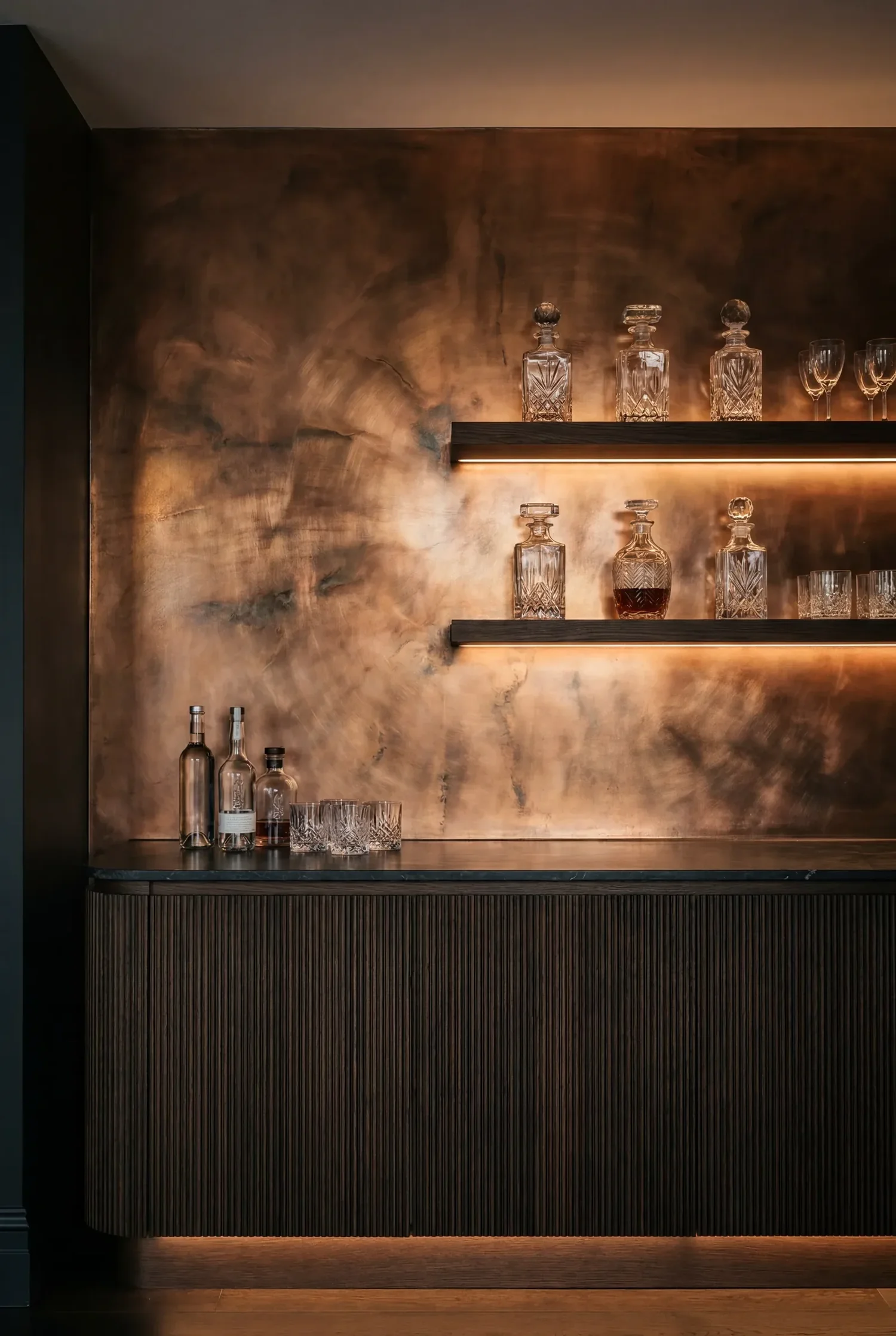
Real metal - Porter's Liquid Copper suspends genuine copper particles in the coating. Once applied, it behaves like copper: it can be polished bright, left to mellow naturally, or patinated by hand with an activator to a living blue-green verdigris. Metallic-look paints fake the colour; this is the actual chemistry happening on your wall.
Can you control how much patina develops?
Yes - patina is a craft decision, not a lottery. We control it by how much activator is applied and where, from a light bloom in the corners to a full verdigris field, then seal the wall to lock the patina where you want it. Left unsealed (typically outdoors), it keeps evolving slowly with air and moisture - some clients want exactly that.
Do you do liquid gold and other real metals?
Yes - the same Porter's liquid metal range includes Liquid Gold, Liquid Iron and Liquid Copper. Gold gives a deep, warm metallic with far more presence than gold-toned paint; iron can be kept gunmetal or rusted (below). For the gold-leaf look across larger surfaces, see Aquagild in the next section - we'll sample both if you're deciding.
What is the iron rust finish?
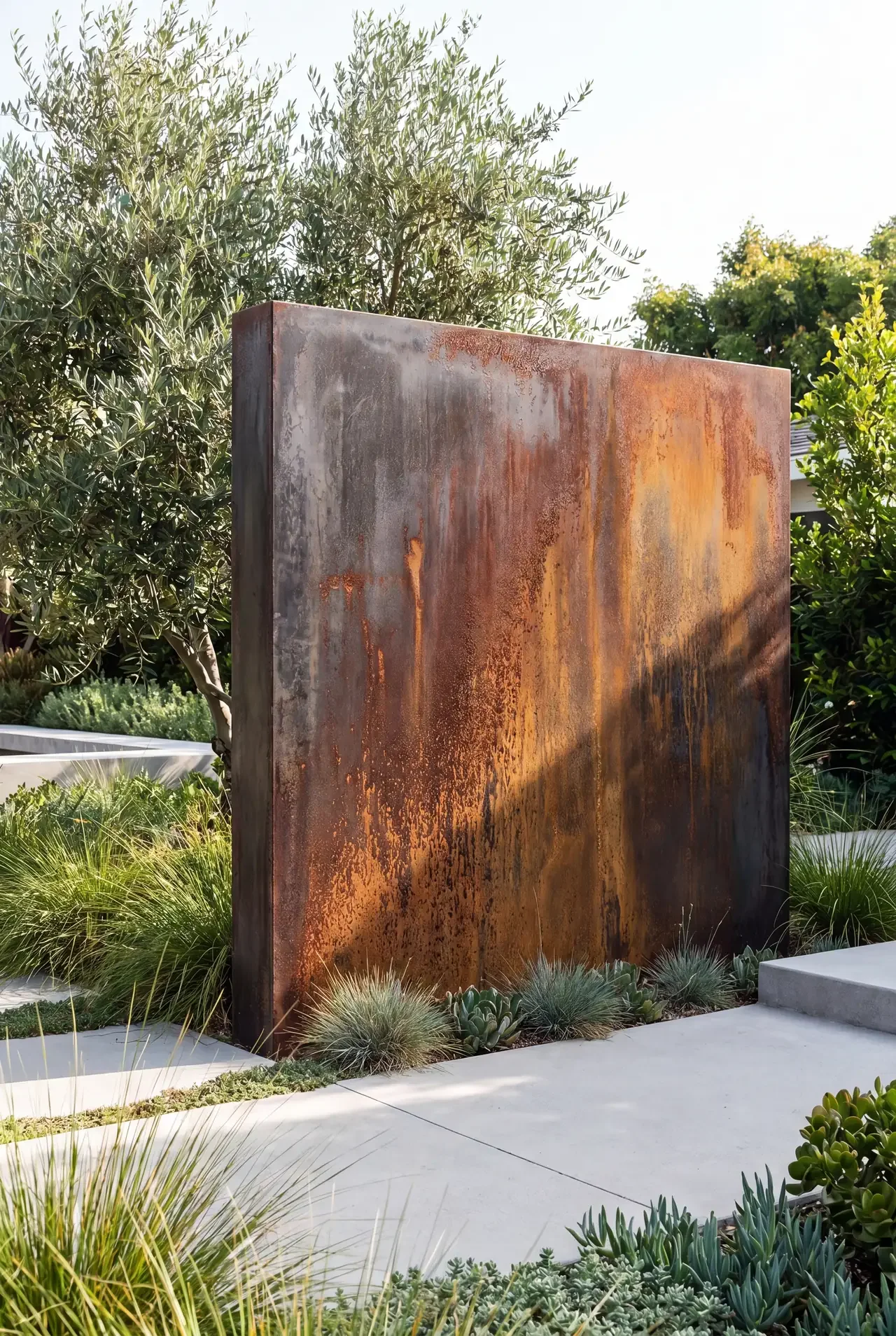
Real iron particles, rusted on purpose. Porter's Liquid Iron is applied to the wall, then an activator triggers genuine oxidation - a corten-steel patina that would take a decade of weathering, developed by hand in days and sealed in place. Every wall rusts uniquely, which is the appeal. Full details on the iron rust page.
Can copper and rust finishes be used outside?
Yes - garden walls, fences, entrance walls and courtyard features are some of the best uses. Outdoors we either seal the finish to hold a chosen patina or leave it live so it keeps weathering like real corten. Indoors, sealed, it's stable and wipeable.
Will a rusted wall stain or mark anything?
Sealed - no: the sealer locks the oxide layer so it won't rub off or run. Unsealed exterior rust walls can weep a little oxide in heavy rain early on, exactly like corten steel does - we detail the wall (drip edges, adjacent surfaces) so it weathers cleanly. We'll spec sealed or live honestly for your situation.
Where do metal finishes work best, and what do they cost?
Powder rooms, bars, fireplaces, entrance walls, restaurant and retail fit-outs - one wall that makes the space. Priced per m² at the premium end with real metal in the tin; a single wall is the normal entry. Price yours on the estimator or see the liquid copper page.
Decorative finishes
Stone paint, Duchess Satin, Industrial Lustre & Aquagild
The rest of the Porter's artisan range - texture, refined sheens and the gold-leaf look.
What is stone paint?
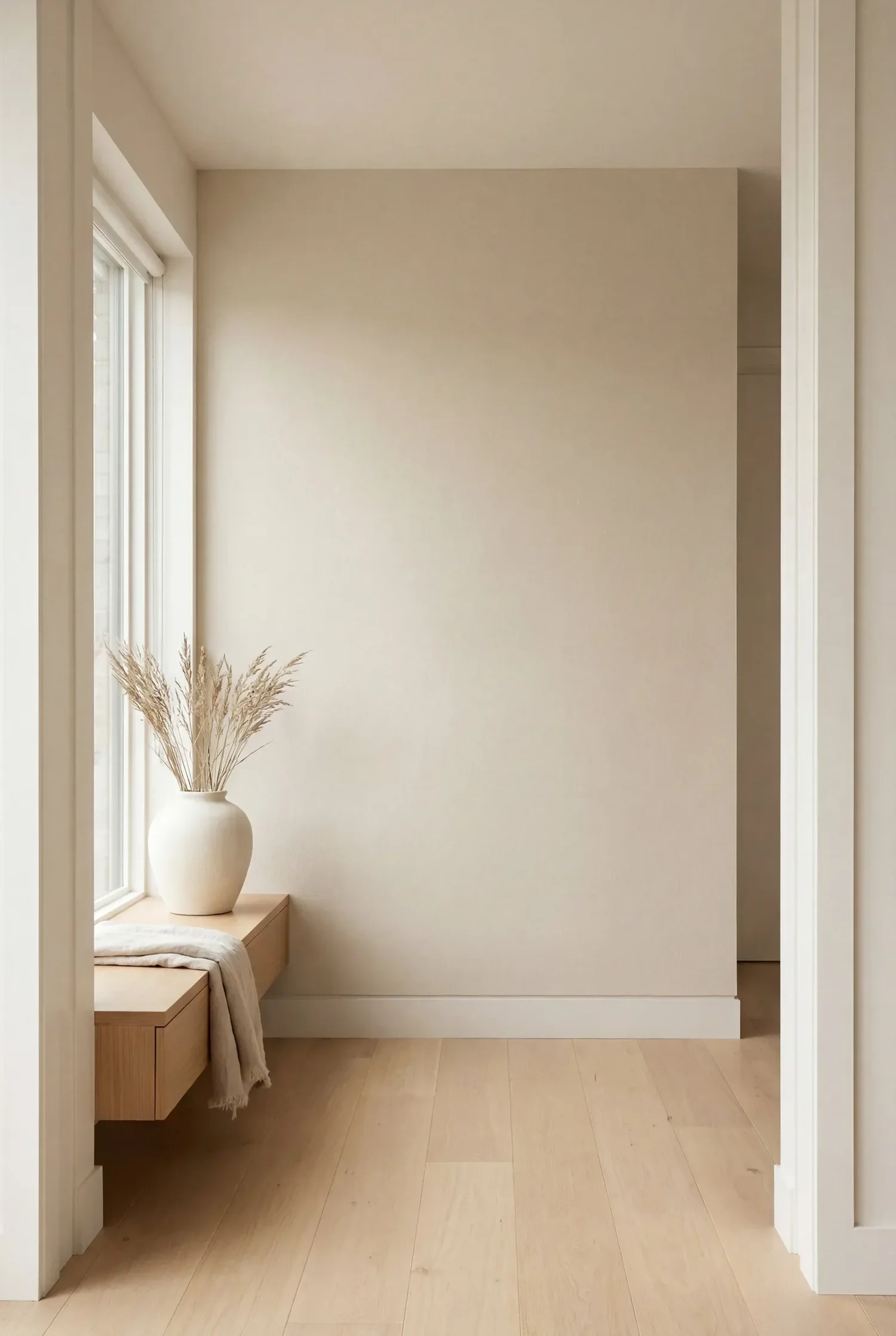
Porter's Stone Paint carries fine mineral aggregate in the coating, so the wall dries with the granular look and feel of natural stone - available in Fine and Coarse grades. It's the stone wall without the stonemason: entrances, fireplaces, exterior feature walls and pillars. Tough, weatherable, and beautiful in raking light. See the stone paint page.
Can stone paint be used indoors and outdoors?
Both - it's one of the most exterior-friendly finishes in the range. Outside it handles Auckland weather on plaster, block and brick features; inside it brings texture to fireplaces and entrance walls. Coarse grade reads more strongly at distance, Fine suits interiors - we sample both.
What is Duchess Satin?
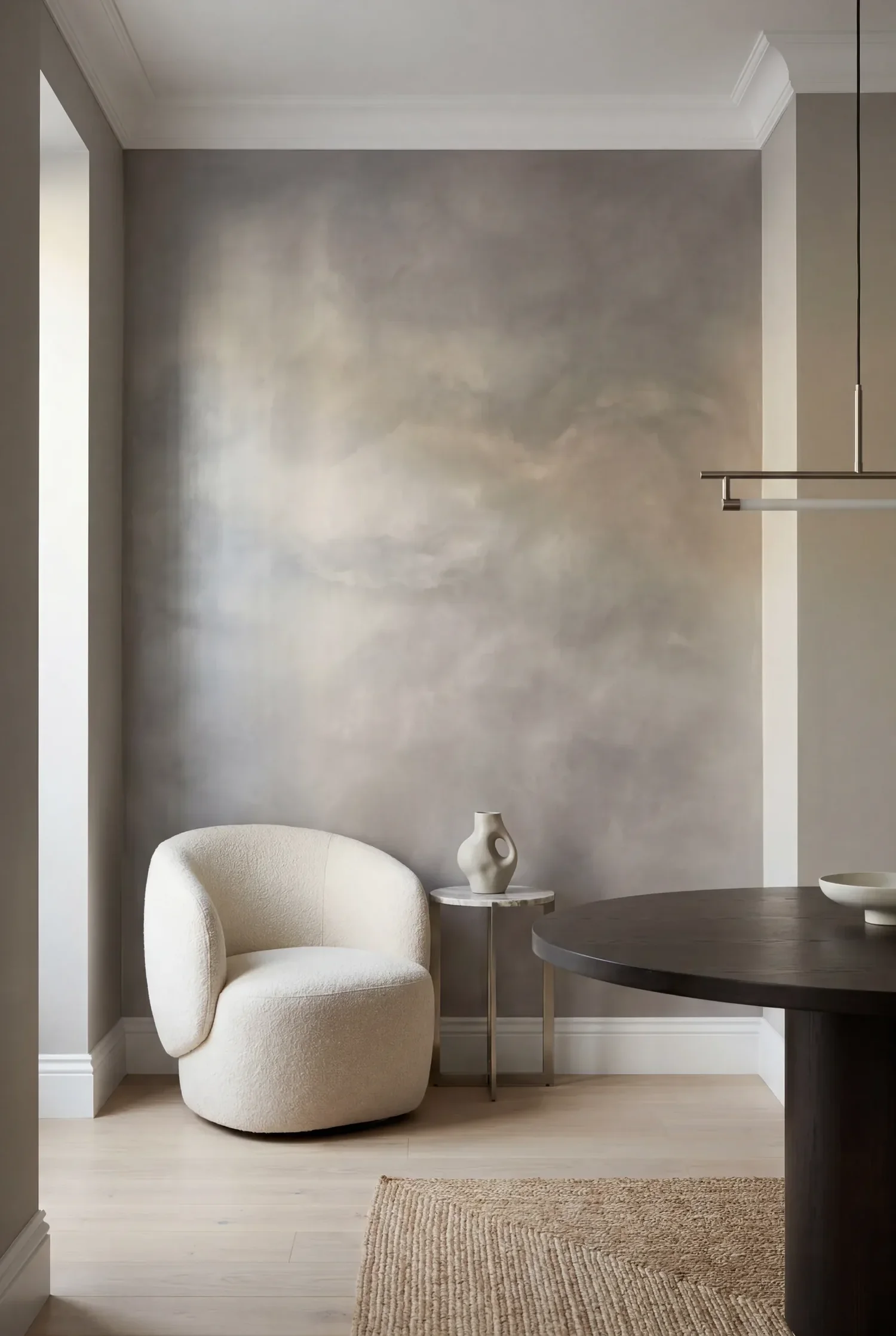
A silk-soft pearlescent finish - walls with a subtle lustre that shifts as light moves across them, morning to lamplight. It reads as refinement rather than shimmer: bedrooms, dining rooms and formal spaces that want a finish, not just a colour. Hard-wearing enough for daily life. Details on the sheens page.
What is Industrial Lustre?
Duchess Satin's moodier sibling - a burnished, gunmetal-style sheen with depth and shadow, suited to media rooms, offices, bars and contemporary spaces. Both sheens are hand-applied Porter's systems that respond to light in a way flat acrylic can't.
What is Aquagild - and is it real gold leaf?
Porter's Aquagild is a water-based gilding system that delivers the gold-leaf look as a seamless, hand-applied finish - walls, ceilings, niches and trim - at a fraction of genuine leaf cost, in gold and silver. It's not leaf sheets; it's better suited to large continuous surfaces because there are no joins. For real-metal depth on a smaller wall, Liquid Gold is the alternative - we sample both. See gold & silver finishes.
Where does gilding actually work in a home?
In deliberate doses: a powder room ceiling, an entrance niche, the back of shelving, a bedhead wall, ceiling roses and trim in heritage rooms. Gold works as the surprise, not the wallpaper. Commercially it's bars, restaurants and boutique retail. Priced per m²; small surfaces make it surprisingly accessible.
House painting
Interior painting in Auckland
The bread-and-butter work, held to a decorative standard - crisp lines, Level 4-5 surfaces, done around your life.
What's included in a full interior repaint?
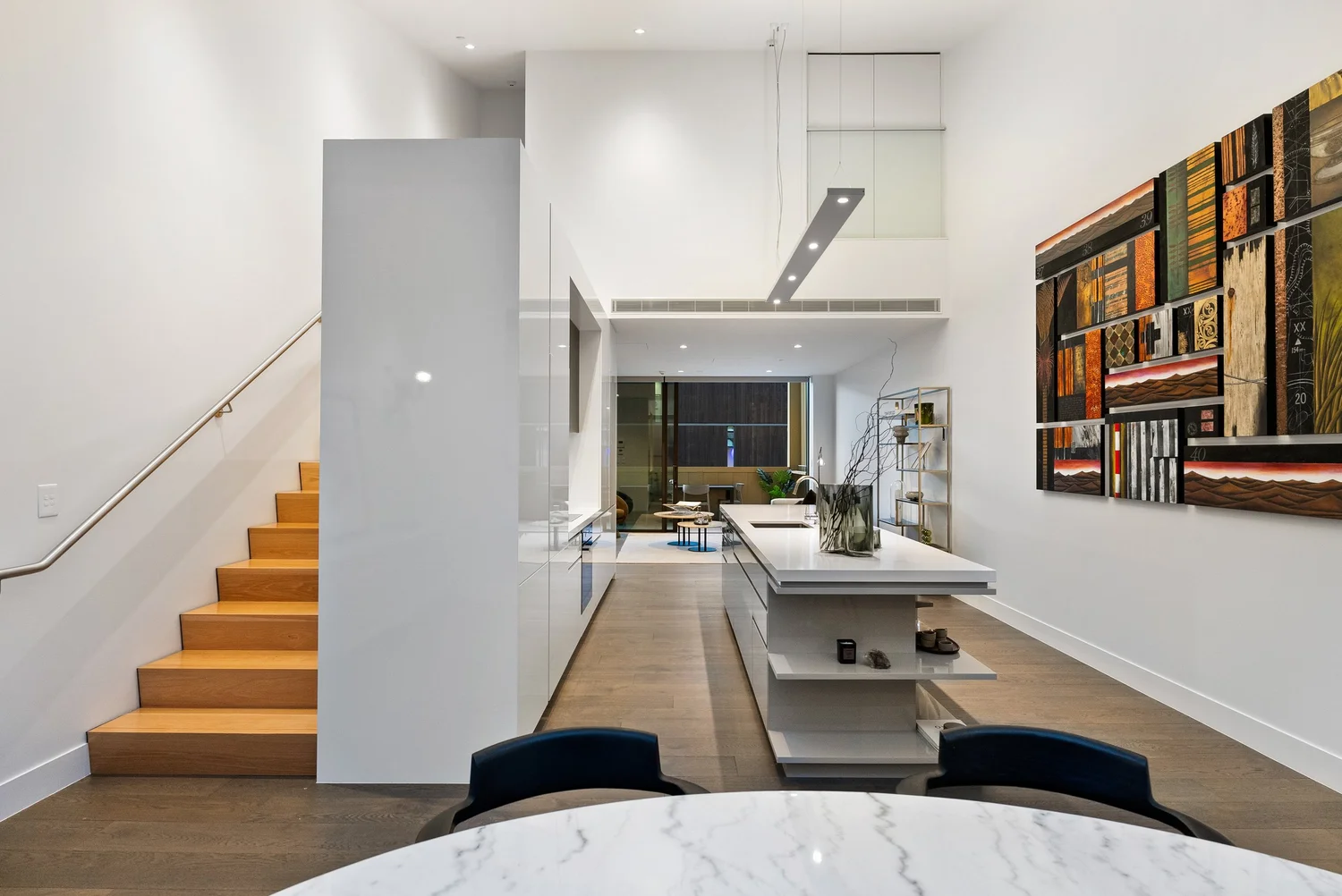
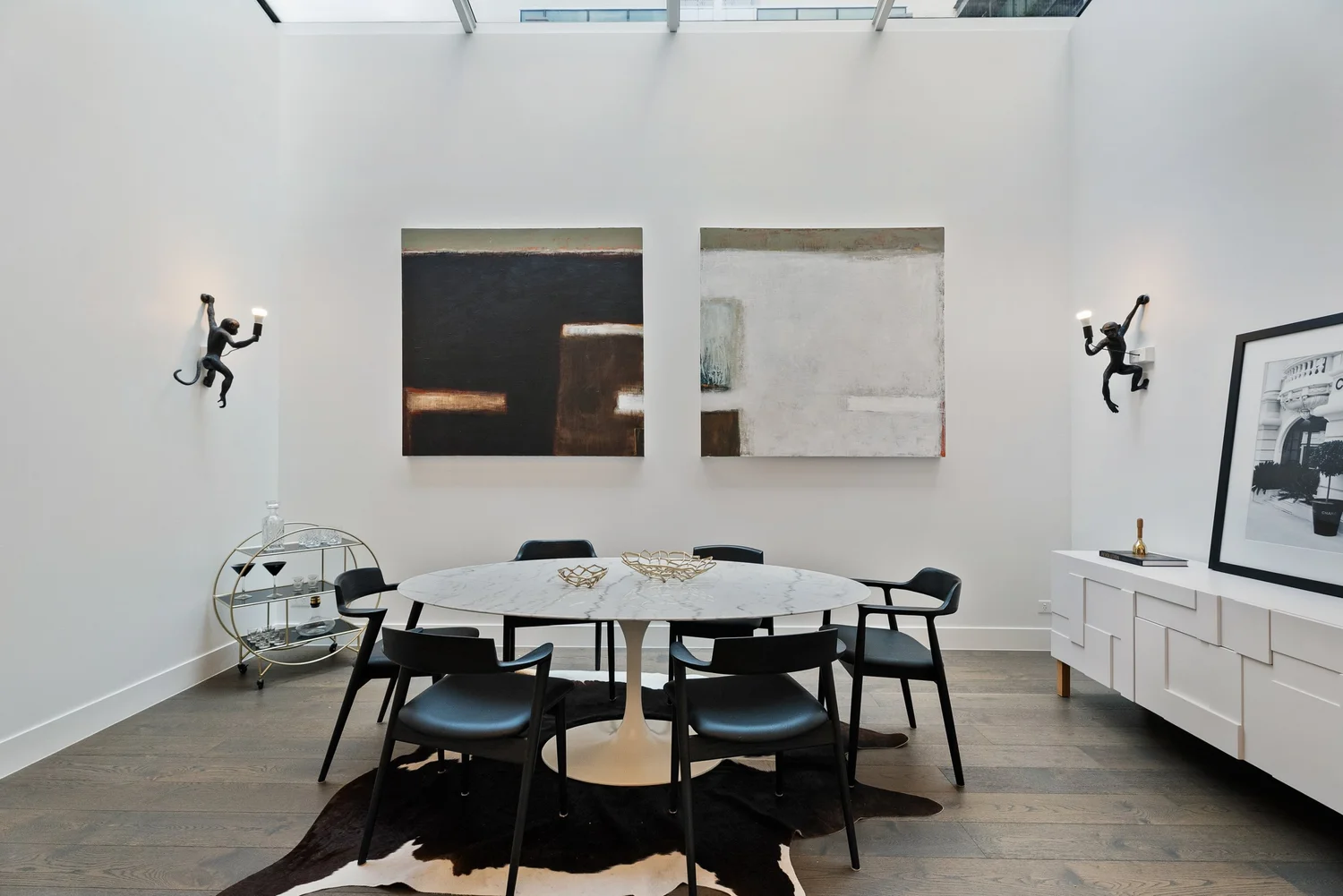
Walls, ceilings, trims, doors, window frames and skirtings - plus the part that decides the result: preparation. Filling, sanding, minor Gib repairs, sealing stains, caulking gaps and masking everything that isn't being painted. Two top coats of a premium system, checked in raking light before we call it done. Full scope on the interior painting page.
How long does interior painting take?
A single room: 1-2 days. A standard 3-bedroom home: 5-7 working days, working room by room so the house stays liveable. Add time for high stud heights, heavy prep or colour changes from dark to light (extra coats). You get a written timeline before we start, and we keep to it.
What paint brands do you use?
Resene is our primary interior system - formulated for NZ conditions, and we hold their highest painter accreditation (Resene Eco Decorator). Decorative work is Porter's Paints. Happy to work in Dulux or specialty brands where a designer or body corporate specifies them.
Do you use low-VOC, family-safe paints?
Yes - low-VOC waterborne paints are our interior standard, which is why families can stay home while we work. Minimal odour, fast re-occupancy of each room, and we ventilate and dust-manage as we go. If anyone in the house has sensitivities, tell us and we'll spec accordingly.
Do I need to clear the rooms before you arrive?
No - we shift furniture to the centre or out, cover everything with clean drop sheets and plastic, and put it all back. Small precious items and wall art are the only things we ask you to tuck away. Each room is reset and tidy at the end of each day.
What's a Level 4 vs Level 5 finish - and which do I need?
They're NZ plastering standards. Level 4 is the normal standard for painted walls in flat or low-sheen paint. Level 5 adds a full skim coat for a dead-flat surface - essential wherever there's critical light (big windows raking along a wall), higher-sheen paints, or any decorative finish. We'll tell you honestly which walls need which - paying for L5 everywhere is usually wasted money.
Can you help us choose colours?
Yes - colour guidance is part of the consult: large brushed-out samples on your walls (never just testpot dabs), checked in your actual light, morning and evening. We work with the Resene palette daily and alongside interior designers when a full scheme is in play. Whites in Auckland villas are their own science - we've done hundreds.
House painting
Exterior painting in Auckland
Weather-tough systems for weatherboard, plaster and brick - prepped properly for the coasts, humidity and UV Auckland throws at them.

When is the best time of year to paint a house exterior in Auckland?
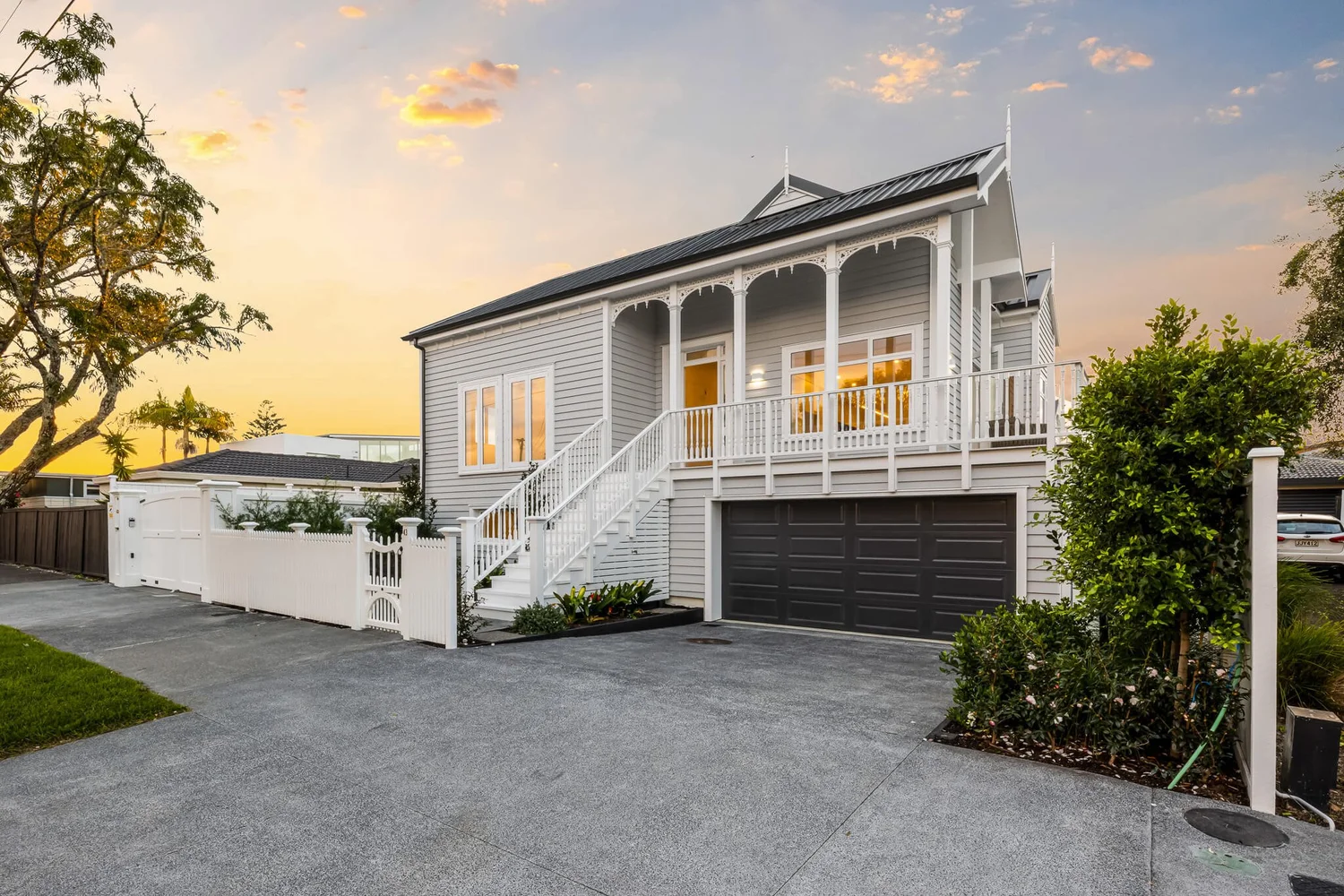
October to April. Waterborne exterior systems need surface temperatures above ~10°C, low humidity and no dew or rain during cure - Auckland winters fight all three. We monitor the forecast and dew point daily during exterior season and sequence elevations to chase the dry weather. Book spring slots by late winter; the season fills fast.
How long does an exterior paint job last in Auckland?
A properly prepped, full-system repaint on weatherboard should give 8-12 years; plaster and brick systems often longer. The two things that decide it: prep quality on day one, and an annual gentle house wash to keep salt, mould and grime from breaking down the coating - we're Resene Wash Wise approved and can advise on that.
What does your exterior process involve?
Wash (treat mould and salt), scrape and sand back to sound edges, repair - timber splices, filling, re-nailing, caulking - spot-prime and full prime where needed, then two full top coats of a Resene exterior system. Downpipes, spouting, windows and doors included in scope. It's 60% preparation, and that's exactly why it lasts. Details on the exterior page.
Do you paint weatherboard, plaster and brick differently?
Completely - each cladding gets its own system. Weatherboard: flexible waterborne enamel systems that move with the timber. Monolithic plaster: elastomeric or high-build coatings that bridge hairline cracking. Brick and block: breathable masonry systems so moisture escapes rather than blistering the paint. Quoting a villa like a plaster box is how exteriors fail early.
My home is pre-1980 - how do you handle lead paint?
Assume lead until proven otherwise on pre-1980 exteriors. We follow lead-safe practices: containment sheeting, wet-sanding or careful scraping rather than dry power-sanding, protective gear and controlled cleanup. It typically adds $1,000-$2,000 to an exterior and we itemise it upfront - it protects your family, your garden and our crew.
Will I need scaffolding, and what does it cost?
Two-storey homes and steep sites usually yes - $1,500-$4,000 depending on the house, included as a line item in the quote. Single-level homes are generally ladder-and-plank. Scaffold also gets a better finish on gable ends and high detail because nobody paints well while clinging to a ladder.
Is house washing included?
Yes - every exterior starts with a full treat-and-wash: mould and moss treatment, then a soft wash to give the new system a clean, sound surface to bond to. We're happy to quote standalone maintenance washes between repaints too; they're the cheapest way to make a paint job last.
House painting
Roof painting & Gib plastering
The top of the house and the bones of the walls - two jobs where cutting corners shows up fast.
How much does roof painting cost in Auckland?
$2,500-$7,000 for a standard Auckland home, depending on roof size, pitch, material and condition. Given a full roof replacement runs tens of thousands, a repaint every decade is the cheapest insurance the house can buy. Scope and photos on the roof painting page.
Do you paint both tile and corrugated iron roofs?
Yes - different systems for each. Concrete tile: treat and waterblast, re-bed and repair where needed, then spray-applied acrylic roof membrane. Long-run iron: treat, wash, spot-prime rust with the right converter/primer, then a full topcoat system built for NZ sun and salt air. Both come with colour choices that can genuinely lift the whole house.
How long does a roof coating last?
10-15 years for a properly applied system on a sound roof - Auckland's UV and coastal salt are the limiting factors. We inspect first and tell you honestly if your roof needs repairs (or a roofer) before it needs paint.
What is Gib fixing and stopping - and why do the levels matter?
Gib fixing is fastening the plasterboard; stopping is the taped-and-plastered joints that make walls look like walls. The finishing levels run up to Level 4 (standard for painted walls) and Level 5 (full skim coat - dead flat, for critical light and premium finishes). Every high-end paint or decorative finish is only as good as the stopping under it, which is why we do it in-house.
What does Gib stopping and plastering cost?
$45-$90 per m² of wall depending on the level specified and the state of the substrate - repairs, skims and full Level 5 sit at the top of that band. Bundled with painting it's quoted as one seamless scope: one team, one standard, no finger-pointing between trades.
Can you skim-coat old scrim or wallpapered walls?
Yes - villas with scrim-and-sarking walls or layers of old wallpaper are our daily bread. Options range from lining with new Gib to careful strip-and-skim, and we'll recommend by condition and budget. It's the single biggest upgrade you can make to how a heritage interior takes paint.
House painting
Pre-sale refresh & commercial painting
Strategic repaints before listing, and clean commercial work with minimal downtime.
Does repainting before selling actually add value?
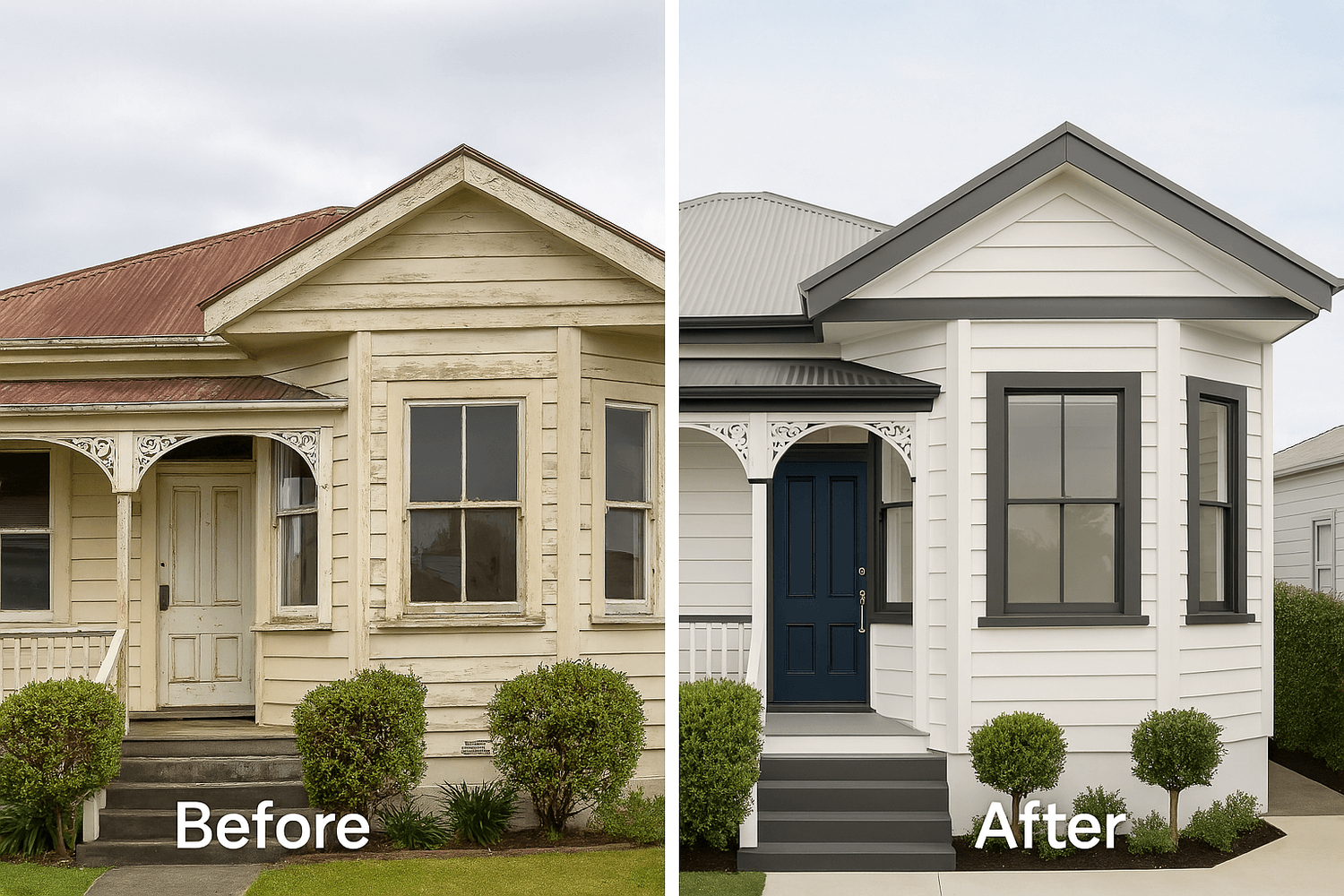
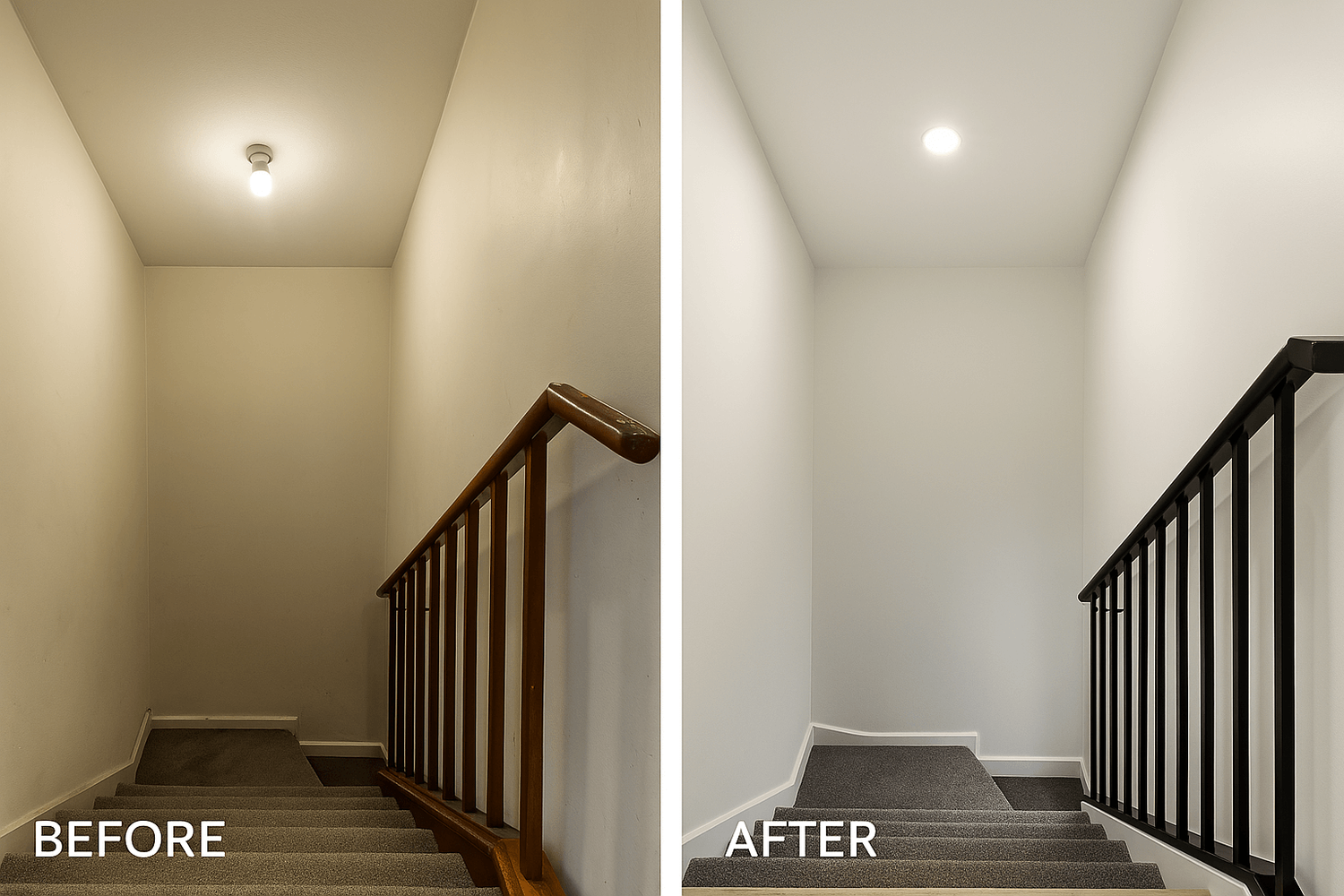
It's consistently one of the highest-ROI things you can do before listing - agents ask for it for a reason. Fresh, neutral paint photographs better, removes buyer objections ("we'd have to repaint") and signals a maintained home. A few thousand in strategic painting routinely returns multiples at auction. See pre-sale refresh.
What should I paint before listing - and what can I skip?
Priority order: front door and entrance (first impression and the photo hero), main living areas and kitchen in a current neutral, scuffed hallways and trims, then an exterior wash plus targeted touch-ups rather than a full repaint if the coating is sound. Skip: bedrooms in decent condition and anything buyers will renovate anyway. We'll walk it with you and be honest about what moves the price.
How fast can a pre-sale repaint happen?
Fast - it's what the service is built for. Interior refreshes typically run 3-5 days, and we schedule around photography and open-home dates, working backwards from your listing deadline. Tell us the campaign date at the first call and we'll tell you straight if it's achievable.
Do you take on commercial and body-corporate work?
Yes - offices, retail, hospitality fit-outs and body-corporate common areas across Auckland. Site Safe systems, $10m public liability, clean sites and proper programme communication. Decorative finishes are increasingly part of this work too - polished plaster receptions, metallic bar walls, gilded details. See commercial painting.
How do you minimise downtime for a business?
We work to your hours, not ours: after-close, overnight and weekend programmes, staged areas so trading continues, low-odour low-VOC systems so staff walk into a fresh space, not a fume cloud. Fixed programme agreed upfront with the site manager.
Can you spec durable schemes for rentals and high-traffic spaces?
Yes - washable low-sheen systems in forgiving neutrals for rentals, scuff-resistant coatings for corridors and stairwells, and semi-gloss enamel on the trim that takes the hits. It's the difference between repainting every tenancy and repainting every five.
Question not answered? It will be tomorrow.
Ask us directly - straight answers, free consults, real samples on your actual wall.
