
A rust effect feature wall is one of the boldest moves you can make inside a home — and one of the most misunderstood. Done properly, it isn't a "faux rust" paint job. It's a coating loaded with real iron particles that is deliberately oxidised on the wall, so the orange, umber and charcoal tones you see are genuine rust forming in place. If you're weighing up a rust effect feature wall in Auckland, this guide covers how Porter's Liquid Iron works, where it suits NZ homes, how it's applied, and what it typically costs.
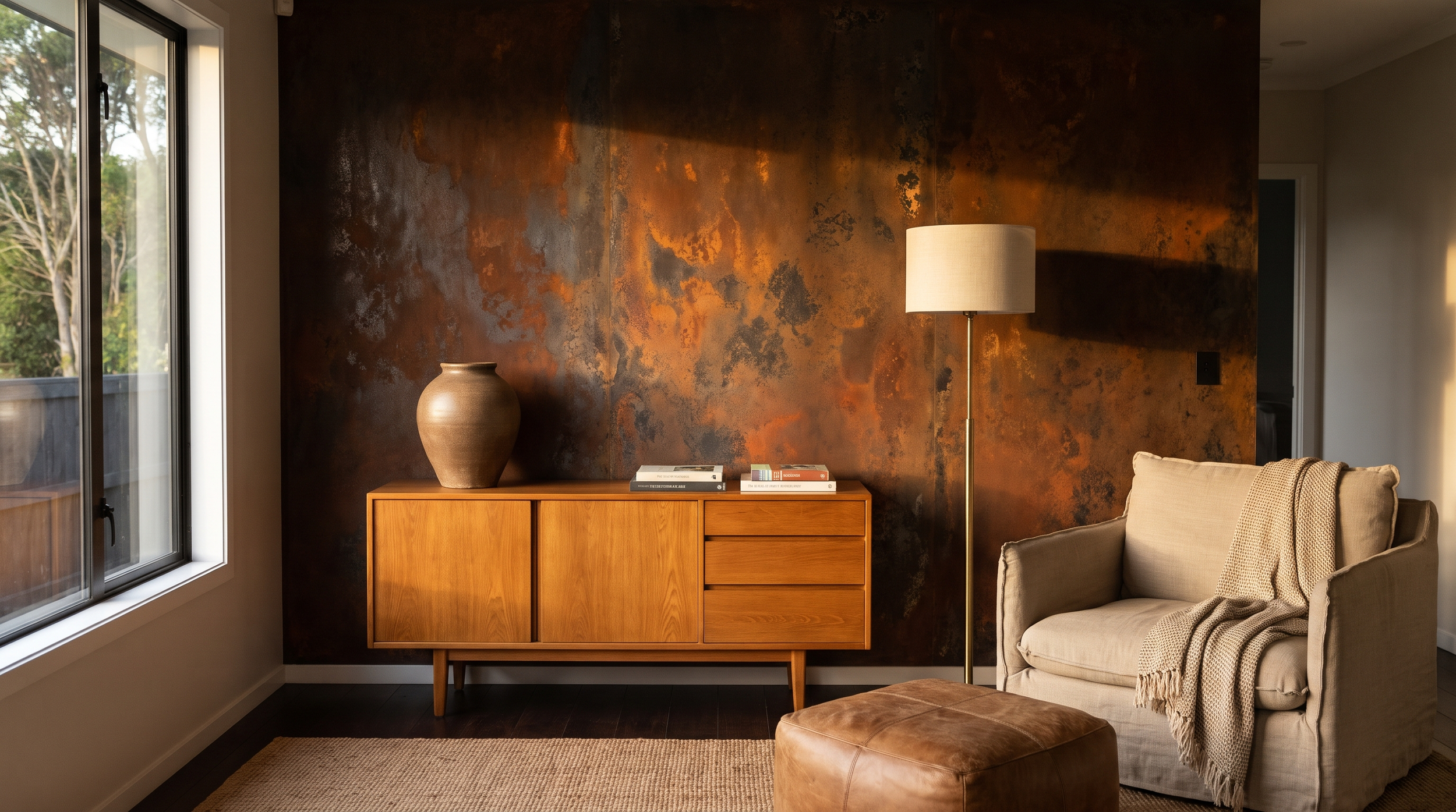
What is a rust effect feature wall?
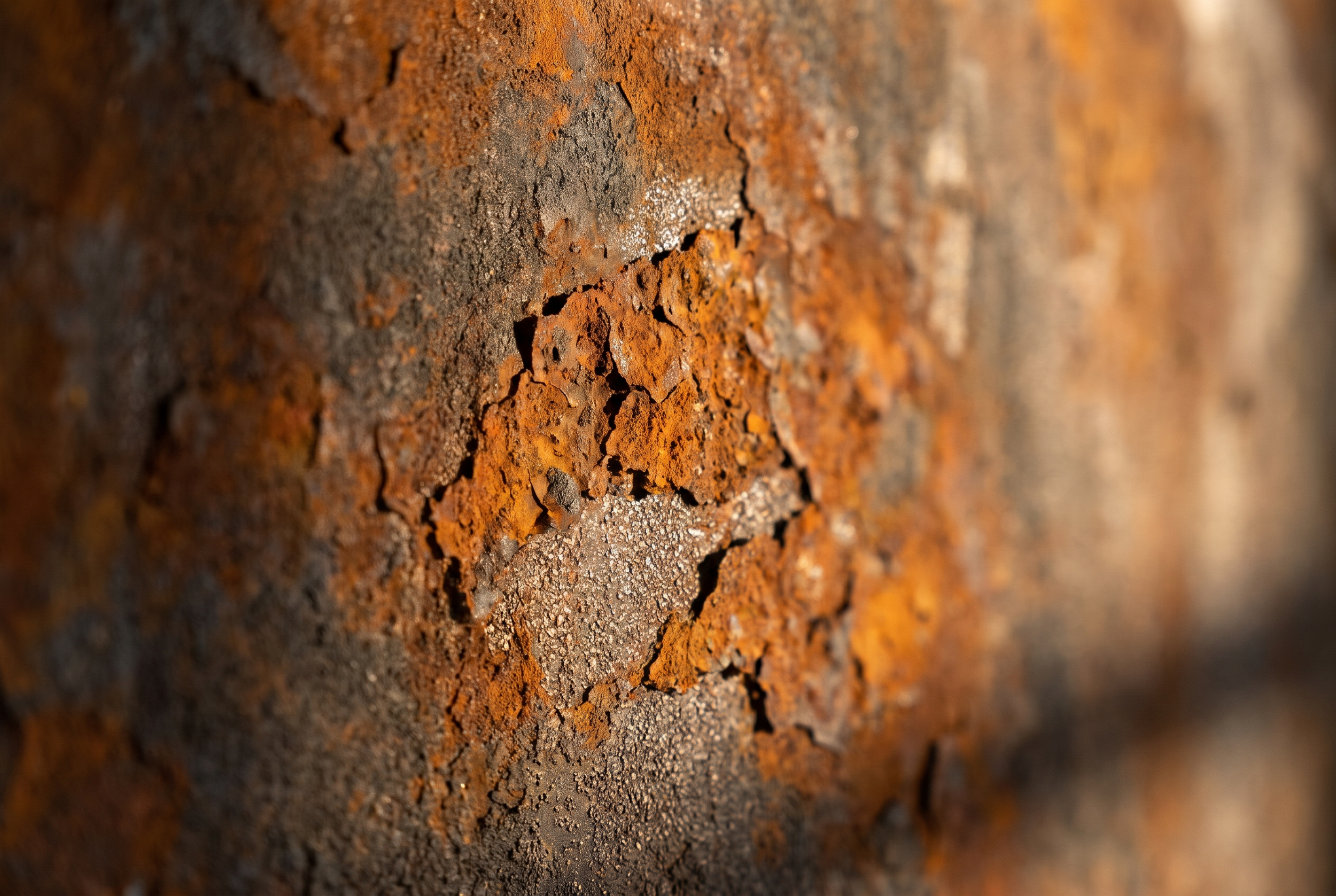
A rust effect wall uses a metal-bearing coating — in our case Porter's Liquid Iron — applied over a sealed base. Once the iron layer is down, an activating solution is applied and the surface begins to oxidise over the following hours and days. The result is a living patina: blooms of burnt orange, deep brown and near-black that look like weathered Corten steel or an old ship's hull, without the weight, cost or sharp edges of real steel sheet.
Because the rust is real, no two walls are the same. The applicator controls the character — how much activator, where it pools, how many layers — but the chemistry has the final say. That's exactly why designers specify it: it reads as an authentic material, not a printed effect.
Liquid Iron vs other metallic finishes
Liquid Iron sits in the same family as Liquid Copper, which develops verdigris greens and blues rather than rust tones. If you're deciding between the two, our guide to Liquid Copper feature walls covers the copper side. In short:
Liquid Iron — warm, earthy, industrial. Oranges, umbers, charcoals. Pairs beautifully with timber, concrete and leather.
Liquid Copper — can be left bright and burnished or aged to turquoise verdigris. Feels more jewellery-like and decorative.
Duchess Satin and other metallic paints — a shimmer or sheen rather than a true reactive patina. Softer and more predictable.
Where a rust patina wall suits Auckland homes
Rust effect finishes are strongest where there's room for drama and a material palette to play against. In Auckland homes we see them work best on:
Living-room feature walls, especially behind a fireplace, media unit or a long timber sideboard.
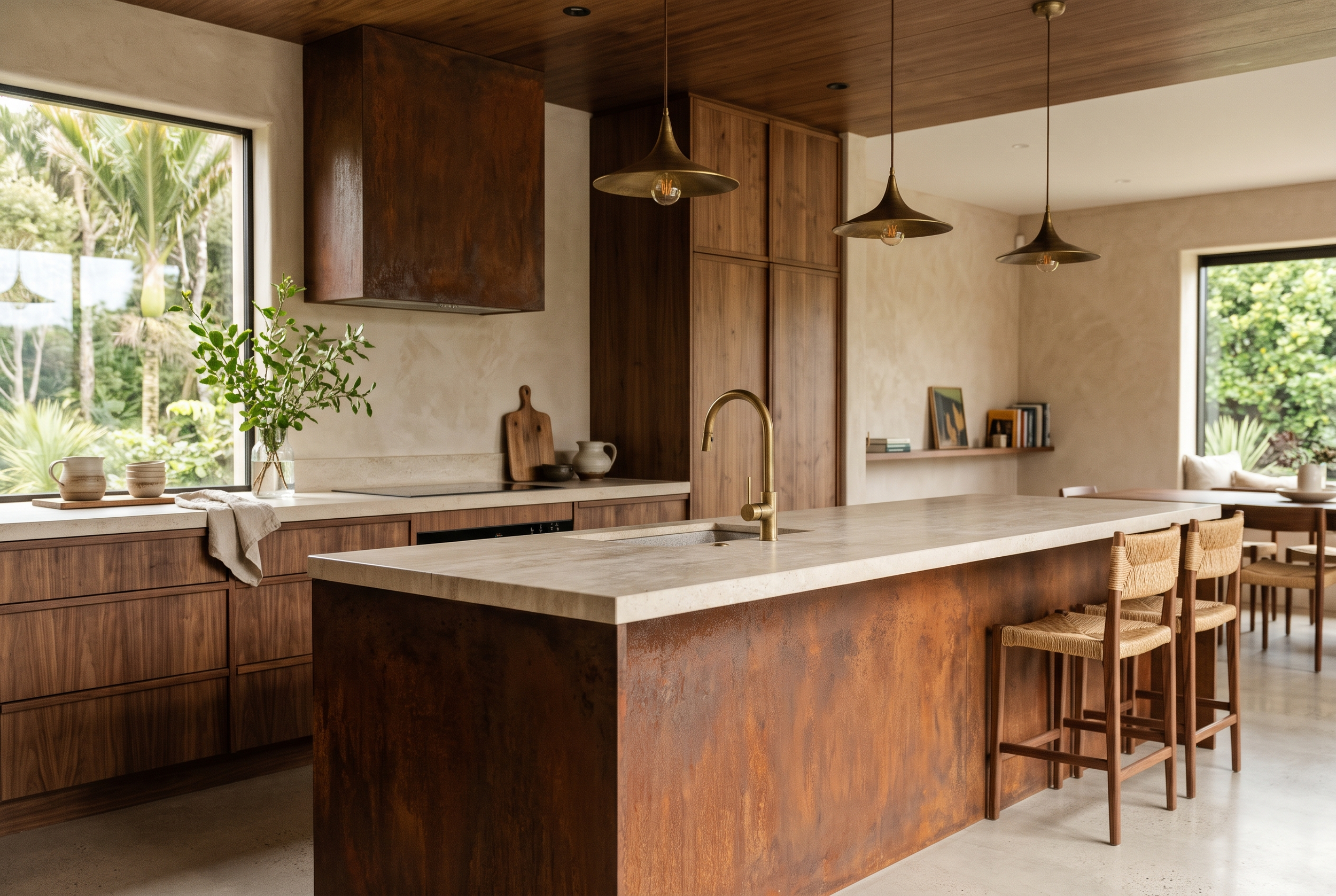
Kitchen islands and range-hood surrounds, where a rust panel adds warmth to stone and timber.
Entry and stair walls in contemporary builds and converted warehouses.
Hospitality and retail fit-outs — bars, restaurants and boutiques wanting an industrial edge without fabricating steel.
Bedroom bedhead walls for a moody, cocooning feel, kept to one wall so it doesn't overwhelm.
It's a less natural fit for small, low-light spaces where the dark tones can close the room in, and for high-splash zones unless the finish is sealed with the right topcoat (more on that below).
Exterior use
Liquid Iron can be used on exterior features, but outdoors the patina keeps developing and Auckland's humidity and coastal salt speed that up. For exterior panels we'll talk through sealing, run-off staining onto paving or cladding below, and whether a real Corten element would be a better long-term answer.
How Liquid Iron is applied
This is a multi-step, hand-applied system, and the steps are where the quality lives. A typical interior process looks like this:
Preparation. Walls are filled, sanded and made sound. Imperfections show through metallic finishes, so prep matters more here than with flat paint. Gib walls should be at a good plaster level before we start — see our Gib fixing and plastering service if yours need work first.
Sealing and basecoat. A primer/sealer and a dark basecoat go on so the iron has a consistent, non-absorbent base to bond to.
Liquid Iron coats. The iron-bearing coating is applied in layers by brush or roller, building enough metal content to oxidise convincingly.
Activation. The rust activator is applied — sprayed, brushed or dabbed depending on the look. This is the artistic stage: heavier in some areas, lighter in others, to create depth and movement.
Curing and patina development. The rust develops over the next day or two. We review it in natural and artificial light and adjust if needed.
Sealing. A clear sealer locks the patina in place and stops it rubbing off or continuing to change. Matt sealers keep it raw; a satin sealer deepens the colour slightly.
Allow around three to five days on site for a single feature wall, mostly because of drying and oxidising time between stages.
How much does a rust effect feature wall cost in Auckland?
Liquid Iron is priced per square metre and, like all artisan finishes, the labour and artistry is most of the cost. Using the Porter's 2026 application rates for Liquid Iron, indicative pricing for an interior feature wall looks like this (NZD, including GST):
Indicative rate: roughly $130–$175 per m² for the full turnkey system (prep, basecoats, Liquid Iron, activation and sealing).
Small feature wall (around 8 m²): roughly $1,050–$1,400.
Standard living-room feature wall (around 12 m²): roughly $1,550–$2,100.
Larger walls or kitchen island + rangehood combinations (around 20 m²): roughly $2,600–$3,500.
What moves the price:
Wall condition. Walls needing heavy filling or re-plastering sit at the top of the range or above it.
Complexity of the look. A layered, heavily worked patina takes longer than an even, light rusting.
Access. Double-height stairwells and voids need scaffold or towers.
Minimum job. Very small areas (a single niche or panel) are covered by a minimum charge because the multi-day process is the same regardless of size.
These figures are indicative only — every wall is different. For a ballpark on your own project, try our free instant estimate, or compare rust against other finishes in our decorative wall finishes cost guide.
Durability and maintenance
Once sealed, an interior rust effect wall is stable and surprisingly low-maintenance:
Cleaning: a dry microfibre cloth or a barely damp cloth. Avoid abrasive cleaners and solvents, which can lift the sealer.
Wear: the sealer protects against light knocks and hand contact. In high-traffic spots (a hallway or island front), we may recommend an extra sealer coat.
Moisture: keep unsealed or lightly sealed rust away from sinks and showers. Water reactivates oxidation and can cause run marks.
Repairs: small damage can be touched in by an experienced applicator, though perfect blending on a reactive finish takes skill — another reason to use a specialist from the start.
Why the applicator matters
Liquid Iron is unforgiving of shortcuts. Rush the basecoat and you get patchy rusting. Over-apply activator and the patina runs or turns muddy. Skip the sealer and the wall can mark clothes and keep changing colour. Key Painting applies the Porter's artisan range across Auckland — you can see more of our rust and iron finishes and other metallic feature walls — and we always prepare a sample board first so you can see the patina in your own light before we touch the wall.
FAQ: rust effect feature walls
Is a rust effect wall real rust?
Yes. Porter's Liquid Iron contains real iron particles, and the activator makes them genuinely oxidise on the wall. It's then sealed so the rust doesn't transfer or keep developing.
Will a rust feature wall stain furniture or clothes?
Not once it's properly sealed. Before sealing, rust can rub off, which is why the sealing step is non-negotiable on interior walls.
Can you put a rust effect finish on gib board?
Yes. Gib is a common substrate. It needs to be well plastered, sanded and sealed first so the finish goes on evenly.
How long does a rust effect feature wall take?
Usually three to five days for a single wall, including drying and oxidising time between coats, depending on the size and the look.
Can I choose how orange or dark the rust looks?
To a degree. We'll show you sample boards with lighter and heavier activation so you can choose the character. Because it's a real reaction, there's always some natural variation — that's part of the appeal.
Ready to bring a rust patina wall into your home?
A rust effect feature wall is a statement — earthy, architectural and completely individual. If you're considering one for your Auckland home or fit-out, get a free instant estimate, or book a consultation to talk through the look, sample boards and cost with our team.