
How to Avoid Bubbling Paint in Auckland’s Coastal Homes
If you live in Auckland’s coastal suburbs, you’ve probably noticed that paint doesn’t always last as long as it should. One of the most common problems we see is bubbling paint — small blisters that form under the surface and eventually peel.
Here’s why it happens and how to avoid it.
Why Paint Bubbles in Coastal Homes
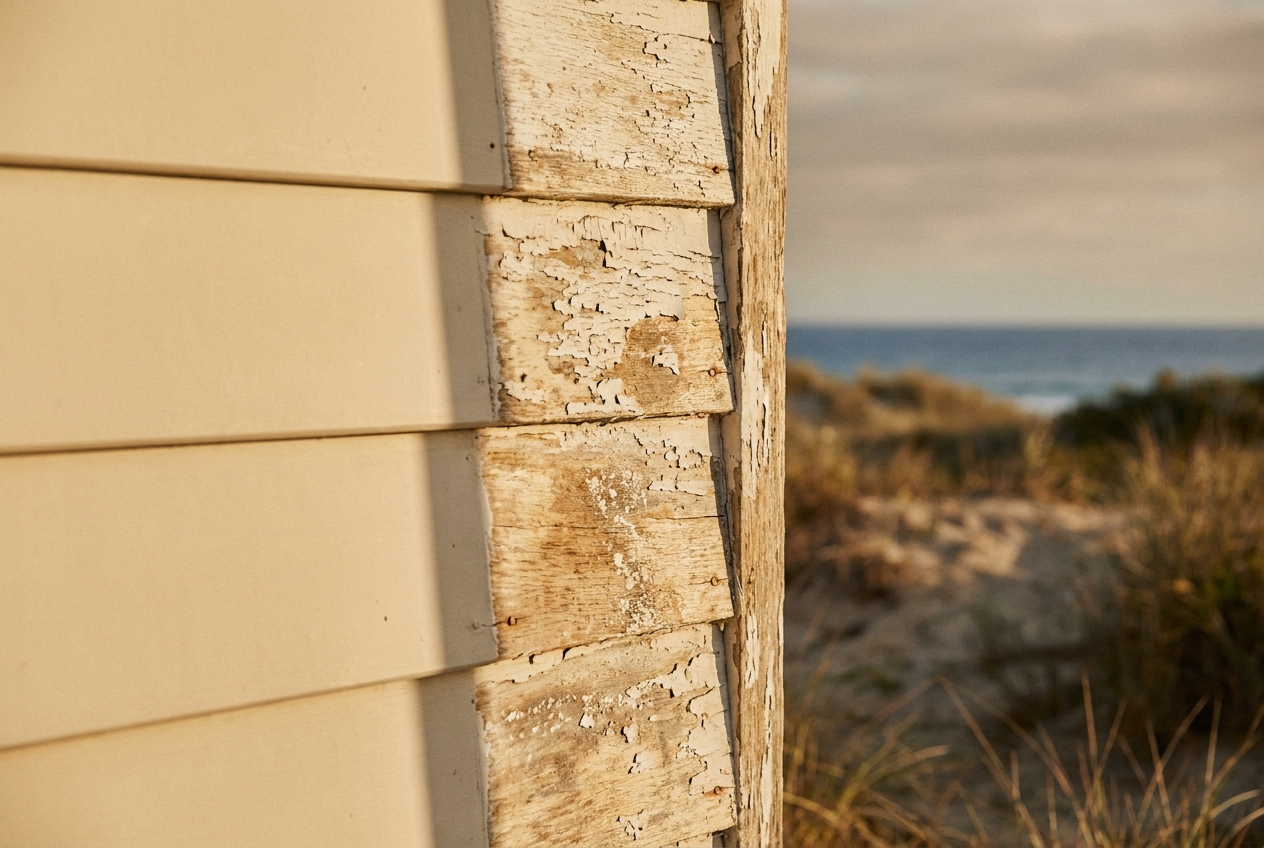
Salt air: Salt deposits draw in moisture, pushing paint off the surface.
Moisture trapped under paint: Poor prep or painting damp surfaces leads to bubbling.
Wrong paint type: Using low-quality or non-exterior paint on weatherboards or roofs.
Sun exposure: North-facing walls in Auckland take a hammering from UV rays.
How to Prevent Bubbling Paint
Thorough Cleaning – Wash exteriors regularly to remove salt and dirt.
Proper Prep – Scrape, sand, and fully dry surfaces before painting.
Use the Right Paint – Premium, weather-resistant paints designed for coastal conditions.
Apply Correctly – Avoid painting in direct sunlight or high humidity.
Regular Maintenance – Rinse exteriors annually to extend lifespan.
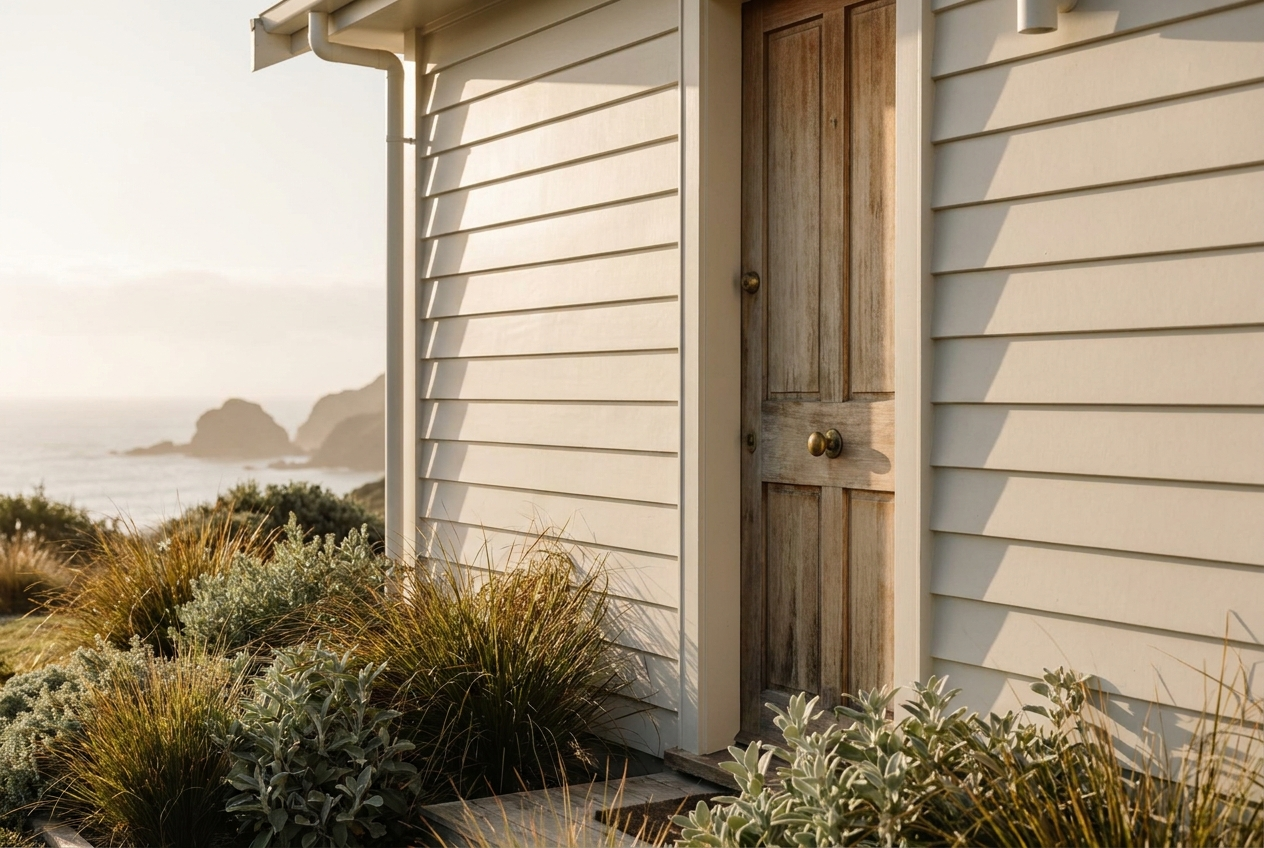
Professional Coastal Painting with Key Painting
At Key Painting, we know Auckland’s coastal conditions inside out.
✅ Salt and moisture-resistant prep & paints
✅ Full surface treatment included
✅ Free instant cost estimates with our painting estimator tool
Bubbling, peeling, flaking, chalking: they're not the same problem
People use these words interchangeably and then get given the wrong fix. They're four different failures with four different causes, and knowing which one you've got tells you what actually went wrong.
| What you're seeing | What it means |
|---|---|
| Bubbling / blistering | The film has lifted off the surface but is still intact, like a blister on skin. Moisture or solvent vapour trapped underneath, or paint applied to a hot surface. Almost always a prep or conditions problem. |
| Peeling | The film has released in sheets. Adhesion failure. Painted over a contaminated, chalky, glossy or damp surface. |
| Flaking / cracking | Brittle film breaking apart, often in a crocodile pattern. Too many coats built up over decades, or a hard coat over a flexible one. |
| Chalking | Powdery residue on your hand. Normal UV breakdown of the binder. Not a failure as such, but nothing will stick to it until it's washed off. |
Pop a blister open and look inside. Bare timber or bare substrate at the bottom means moisture pushed it off from behind. If the old paint layer is still there and the new coat has lifted off it, that's adhesion. It's a five-second diagnostic and it changes the whole repair.
Why salt air is genuinely worse, not just marketing
"Coastal conditions" gets thrown around loosely, so here's the actual mechanism.
Salt is hygroscopic — it pulls moisture out of the air and holds it. Sea spray carries fine salt inland and it settles on your walls, roof and joinery. If it isn't washed off, it sits there and every humid Auckland night it draws water to itself, right at the paint surface.
Worse, if salt was on the surface when it got painted, it's now trapped under the film, still pulling moisture through. That builds pressure behind the paint and pushes it off. That's why a coastal repaint that skipped a proper wash blisters in the first year while the same paint on the same house inland lasts a decade.
It stacks up with two other things:
- UV. New Zealand's UV index runs around 40% higher than equivalent latitudes in Europe, thanks to the ozone hole and a clean atmosphere. Our sun destroys paint faster than the spec sheets from overseas assume.
- Wind-driven rain. Auckland's exposed western and eastern coasts get rain pushed horizontally into wall junctions and window heads that a sheltered site never sees.
If you're in Milford, Takapuna, Devonport, Point Chevalier, Herne Bay, Mission Bay, Kohimarama, St Heliers, Titirangi's coastal edge, Muriwai or Piha, you're in it. Anywhere you can taste salt after a southwesterly, your paint is in it too.
North and west walls fail first. Every time.
Walk around any Auckland house and the failure won't be even. In the southern hemisphere the north face takes the most sun, and the west face takes the hottest afternoon sun plus the prevailing weather. Those two walls will be a season or two ahead of the others in every kind of degradation.
Which gives you a useful maintenance rule: inspect the north and west walls annually and treat them as your early warning system. When they start chalking, the whole house is about two years from needing attention. And if a painter quotes an exterior without ever mentioning that the west wall needs more work, they haven't really looked at it.
The conditions window, with actual numbers
Half of all blistering is caused by painting at the wrong moment, and "it was a nice day" is not the test.
- Surface temperature, not air temperature. A dark wall in Auckland summer sun hits 50°C plus. Paint on that and the solvent flashes off before the film can level, trapping vapour underneath. That's a bubble. Above roughly 35°C surface, stop.
- Below about 10°C, stop too. Waterborne paints stop coalescing properly and never form a full-strength film, even though they look dry.
- Dew point matters more than humidity. The surface needs to be at least 3°C above dew point. On a clear Auckland autumn evening, walls can drop below dew point by late afternoon and get wet with no rain in sight. Anything painted after about 3pm can be ruined overnight.
- Above roughly 85% relative humidity, don't start. It won't cure.
- Follow the shade. Chase the house around through the day — east face in the afternoon, west face in the morning. Never paint a wall in direct sun.
That's why a reputable exterior job in Auckland takes longer than the optimistic version. We build weather days into the schedule because the alternative is coming back.
Washing: the cheapest maintenance there is
If you take one thing from this page: wash the salt off your house every year. It costs almost nothing, takes an afternoon, and it is the single highest-return thing a coastal homeowner can do for their paint.
- Once a year minimum, twice if you're right on the water. Late spring is ideal, after the winter weather has finished.
- Low pressure and a soft brush. Please don't waterblast your weatherboards. High pressure drives water in behind the boards and into joints, and forces it under the paint film — you'll cause the exact blistering you were trying to prevent. A hose, a soft broom and a house wash solution is correct.
- Rinse thoroughly. Leftover detergent residue is its own bond breaker next time you paint.
- Get the underside of eaves, window heads and the sheltered spots. Rain never rinses those naturally, so that's where salt accumulates worst. It's why so many failures start under the eaves.
Different surfaces, different weak points
- Weatherboards: end grain is the enemy. Board ends, scarf joints and cut edges suck up water like a straw. They need sealing properly, and they're where blistering starts.
- Plaster and monolithic cladding: hairline cracks let water in behind the coating, then it pushes back out as a blister. Needs a flexible, breathable system — a hard film over a cracking substrate fails fast.
- Roofs: the harshest surface on the property. Full sun, full salt, standing water in the valleys, and huge thermal movement. Rust needs treating to bare metal; paint over rust and it keeps going underneath. See roof painting.
- Joinery and window frames: condensation runs down the inside, rain hits the outside, and the sun cooks them. First thing to fail on almost every coastal house.
- Fibre cement: generally very stable, but the joints and fixings move and that's where coatings crack.
The trap: just painting over it
The instinct when you see bubbling is to scrape the loose bits and put a fresh coat over the top. It looks fixed for a few months, which is the problem — you've sealed the moisture and the salt in, and the new film is bonded to a surface that was already letting go.
It comes back bigger, and now you've paid twice.
The honest repair is: find the water, fix the water, scrape back to sound material, wash off the salt, feather the edges, prime the bare areas, and recoat in the right conditions. On a badly gone wall that might mean taking the whole wall back rather than spot-repairing, because a patchwork of new film over old failing film just gives you new failure lines.
If the blistering is coming from moisture inside the house rather than outside, that's a different job again — see fixing water damage on walls before painting. And if the boards underneath have gone soft, no coating will save them; we repair those with the Repair Care system rather than replacing original timber.
What a realistic lifespan looks like on the coast
Nobody likes hearing this, but you should plan around it rather than be surprised by it. On an exposed coastal Auckland property, expect an exterior repaint cycle of roughly 6 to 8 years rather than the 10 to 12 you'd get in a sheltered inland suburb. Joinery and the north and west walls will want attention sooner than that, often as a partial touch-up in between.
Washing annually, dealing with small failures early, and using a proper system instead of the cheapest quote is what moves you toward the top of that range instead of the bottom. Our exterior painting quotes spell out the prep line by line, which is where the difference actually lives.
Frequently asked questions
Why does paint bubble on coastal homes in Auckland?
Bubbling (blistering) happens when moisture or air gets trapped under the film, or paint is applied to a hot, damp or poorly prepped surface. On the coast, salt, humidity and strong sun make it more common — especially on north- and west-facing walls.
How do you fix bubbling paint?
Scrape back the blistered areas, address the moisture source, sand and clean, then prime and repaint with a quality system in the right conditions. Painting in direct heat or onto damp surfaces is a common cause of the problem returning.
Can bubbling paint be prevented?
Yes — thorough prep, washing off salt and contaminants, priming bare areas, and painting in suitable temperatures and humidity. In coastal Auckland, choosing a durable, breathable exterior system makes a real difference.
Battling bubbling paint on a coastal home? See our exterior painting service, get a free instant estimate, or book a free consultation.