
How to Fix Water Damage on Walls Before Painting
Painting over water-damaged walls without fixing the problem first is a recipe for disaster. The stains will bleed through, the paint will bubble, and the damage will keep spreading. If you’re an Auckland homeowner dealing with water damage, here’s the right way to repair it before painting.
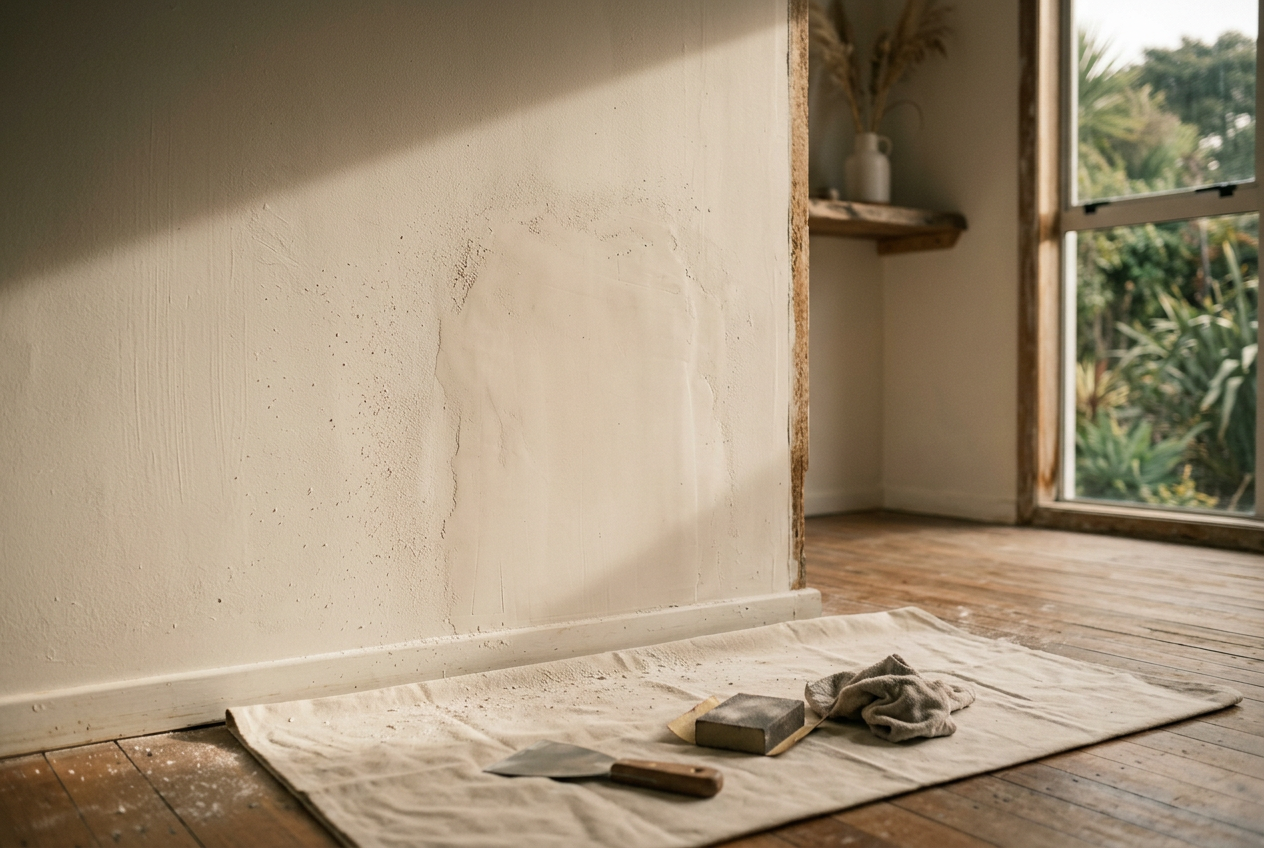
Step-by-Step: Fixing Water Damage on Walls
Identify & Repair the Source
Find where the water is coming from (leaks, roofs, plumbing, condensation) and fix it first.
Dry the Area Completely
Use fans or dehumidifiers — painting over damp surfaces guarantees failure.
Remove Damaged Material
Scrape away peeling paint, bubbled gib, or crumbling plaster.
Treat Mould or Stains
Clean with a mould treatment or stain blocker.
Repair & Plaster
Patch gib, skim coat with plaster, and sand smooth.
Prime the Surface
Use a stain-blocking primer to prevent marks showing through.
Repaint
Apply 2 coats of premium interior paint.
Why Professional Help Matters
Water damage often hides deeper issues like leaks or mould. At Key Painting, we:
✅ Repair and plaster damaged walls
✅ Use mould- and stain-resistant primers
✅ Ensure a flawless finish that lasts
✅ Provide free instant estimates via our
First: work out what kind of water it is
Every water stain looks roughly the same. The cause almost never is, and the fix is completely different depending on which one you've got. Getting this wrong is the single most expensive mistake in this whole job, because you repair the wall, repaint it, and six weeks later the stain is back.
| Cause | What it looks like | Who fixes it |
|---|---|---|
| Roof or flashing leak | Brown, ring-shaped stain on a ceiling or high on a wall. Worse after heavy rain, dry between. | Roofer, then us |
| Plumbing leak | A stain that grows steadily whatever the weather. Often near a bathroom, kitchen or laundry wall. | Plumber, then us |
| Condensation | Even, widespread damp with black mould spotting. Worst in winter, on cold outside walls, in corners and behind furniture. | Ventilation, then us |
| Rising damp | A tide mark low on the wall, roughly level all the way along, sometimes with salt crystals. | Building assessment |
| External water ingress | Damp tracking in from a wall junction, window head or deck. Common in 1990s and 2000s monolithic-clad homes. | Building assessment first |
In Auckland, condensation is by far the most common and by far the most misdiagnosed. Between our humidity, older uninsulated homes and heating that gets turned off overnight, a huge number of the "leaks" we get called out to look at are simply warm wet indoor air condensing on a cold wall. The tell is the pattern: a leak stains in a defined shape from a single point, while condensation goes furry and even across a whole cold surface and shows up worst in the corners and behind the wardrobe.
That matters because you cannot repaint your way out of a condensation problem. Extraction, insulation and a bit of heating fix it. Paint just gives the mould a fresh surface.
How to tell if it's still active
An old, fully dry stain from a leak that was fixed years ago is a simple job. An active one is not, and you need to know which you're dealing with before you spend money.
- The plastic test. Tape a square of clear plastic tightly over the area and leave it 24 to 48 hours. Condensation forming underneath means moisture is still moving through.
- A moisture meter. Cheap ones are fine for comparison. Read the damp area against a known dry wall in the same room. Sound interior plasterboard should sit around 10 to 12%.
- The smell. A musty, earthy smell that doesn't shift means something is still wet, usually inside the wall rather than on it.
- Watch it through a week of rain. If it darkens when it rains, it's coming from outside. If it's steady regardless, suspect plumbing or condensation.
Drying takes longer than you think
This is where most DIY jobs fail. Everyone underestimates drying time, and Auckland's ambient humidity makes it worse than the internet's advice suggests.
- Surface-damp plasterboard: a few days with airflow.
- Saturated plasterboard: one to two weeks, with a dehumidifier running.
- Wet framing or insulation behind the board: several weeks, and the lining usually has to come off so it can actually dry. Wet insulation does not recover — it gets replaced.
- Solid plaster or masonry: a month or more. It holds far more water than you'd guess.
A dehumidifier in a closed room beats a fan in an open one, because a fan in humid Auckland air is just moving humid air around. And don't trust the surface: plasterboard dries face-first and can feel perfectly dry while the core and the framing behind it are still wet.
Repair or replace?
Replace the plasterboard if: it's soft or spongy under thumb pressure, it's visibly swollen or sagging, the paper face has delaminated, the joints have opened up, or mould has come through from the back. Once the gypsum core has broken down it has no strength left and nothing you paint on will change that.
You can save it if: it's firm, flat and just stained. Dry it, seal it, skim any surface damage, sand it back and repaint.
Cut generously when you do replace — at least 100mm past the visible damage, because the wet zone is always bigger than the stain. Our gib fixing and plastering service handles the cut-out, re-sheet, stopping and skim so you're not juggling two trades on one wall.
Mould: treat it properly, don't just wipe it
Mould in a damp Auckland home is a health issue, not just a cosmetic one, and there's a bit of bad advice going around.
- Household bleach is not the right product for a porous surface. It kills what's on the surface and bleaches the stain so it looks gone, but the water carries spores deeper into the plasterboard. It comes back.
- Use a proper anti-mould wash from a paint merchant, leave it on for the dwell time on the label, then rinse and dry fully.
- Wear a P2 mask and gloves and open the windows. Disturbing a mould colony puts a lot of spores in the air.
- If it covers more than about a square metre, or it's inside the wall cavity, or anyone in the house has asthma or a respiratory condition, get it assessed rather than tackling it yourself.
Sealing the stain so it never comes back
Water stains are water-soluble. Coat them with a waterborne paint and you re-dissolve the stain, which then wicks up through your fresh coats — so it reappears, usually about a week later, in exactly the same shape. That's not a paint fault. That's using the wrong primer.
The choice comes down to two options:
- Shellac-based stain blocker. The strongest thing available. Nothing gets through it. Use it on serious brown water stains, tannin bleed from cedar or kauri, smoke damage and old nicotine. Smells strong and needs ventilation, but it works when nothing else does.
- Water-based stain blocking sealer. Low odour, easier to live with, and fine for light stains. Not enough on its own for a heavy brown ring.
Two thin coats over the stain beats one thick one, and take the primer well past the edge of the mark. Then spot-test: prime, let it dry, leave it a day, and check the stain hasn't ghosted back before you commit to painting the whole wall. Ten minutes of patience there saves repainting the room.
Two things worth knowing before you start
Talk to your insurer first if it was a sudden event. A burst pipe or a storm leak is often covered; gradual damage almost never is. Either way, take photos before you touch anything and keep every invoice. Repairing first and claiming later is a losing position.
If the house is monolithic-clad and built between roughly 1994 and 2005, stop and get a building assessment. Plaster-clad, no eaves, that era. Internal damp in those homes can be a cladding failure rather than a leak, and patching the inside while the structure stays wet is exactly the wrong order to do things in. We'd tell you to get that checked before we quoted a repaint, because we'd rather lose the job than paint over a structural problem.
Once it's fixed and dry
You've got a blank canvas, and if it's a room that had the damp problem in the first place it's worth choosing the finish with that in mind. Breathable mineral finishes like lime wash and Venetian plaster let a wall release moisture rather than trapping it behind a plastic film, which is part of why they've been used on damp-prone European buildings for centuries. Lime is also naturally alkaline, which mould doesn't much enjoy.
Not a substitute for fixing the cause. But if you're already repainting, it's a sensible upgrade rather than just putting the same system back.
Frequently asked questions
Can you paint over water-damaged walls?
Not until the moisture source is fixed and the surface is dry, repaired and sealed. Painting over active damp or staining without a stain-blocking primer means it will bleed back through — fix the cause first.
How do you seal water stains before painting?
Once the wall is dry and any damaged plasterboard repaired, apply a stain-blocking primer/sealer over the marks before your topcoats. This stops tannin and water stains telegraphing through the new paint.
Should I repair the plasterboard or just paint?
If the board is soft, swollen or crumbling it needs replacing or re-skimming — paint won’t fix structural damage. Sound but stained board can be dried, sealed and repainted. Our gib fixing & plastering service handles the repair side.
Dealing with water-damaged walls? Get a free instant estimate or book a free consultation and we’ll repair and repaint it properly.